Every year, 2.5 million people wanted to taste Ferran’s cooking. Today, Spain says it “owes a great debt to him and to El Bulli.” His gastronomic work was never about repeating existing recipes or conventions.
By Moon Sang-duk (mosadu@fortunekorea.co.kr) · Photos by Kang Tae-hoon
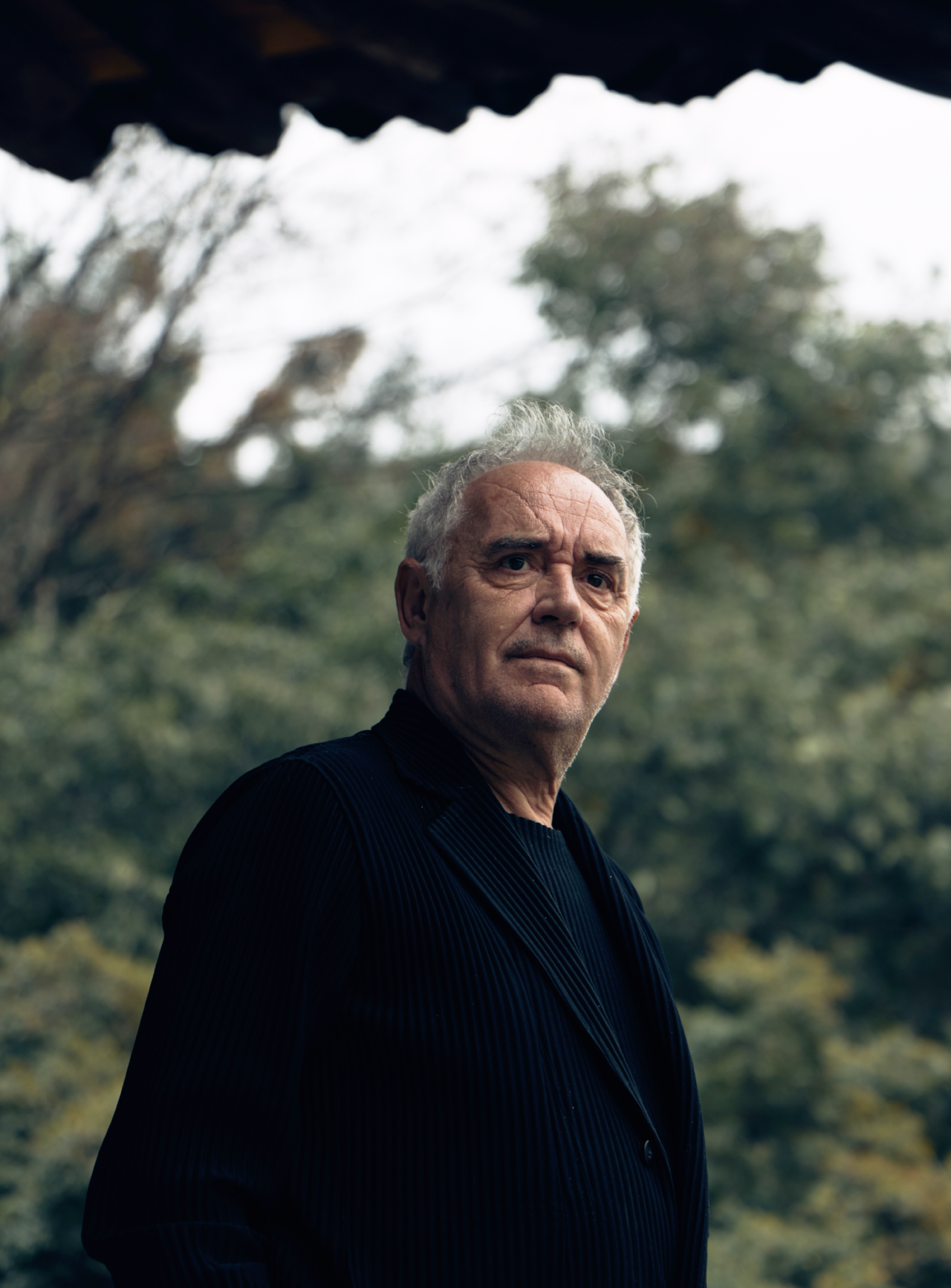
In late October, Ferran Adrià visited a small hermitage in Jangseong, South Jeolla province. Cheonjin-am, reached by a 15-minute side path from the national park information center at the foot of the mountain, is home to Ven. Jeong Kwan, widely known as “the master of sachal (temple) cuisine.” Ferran shared a temple meal there with about ten fellow chefs, including Chef Choi Jung-yoon, chair of Nanro Foundation, and Chef Park Jung-hyun of Atomix.
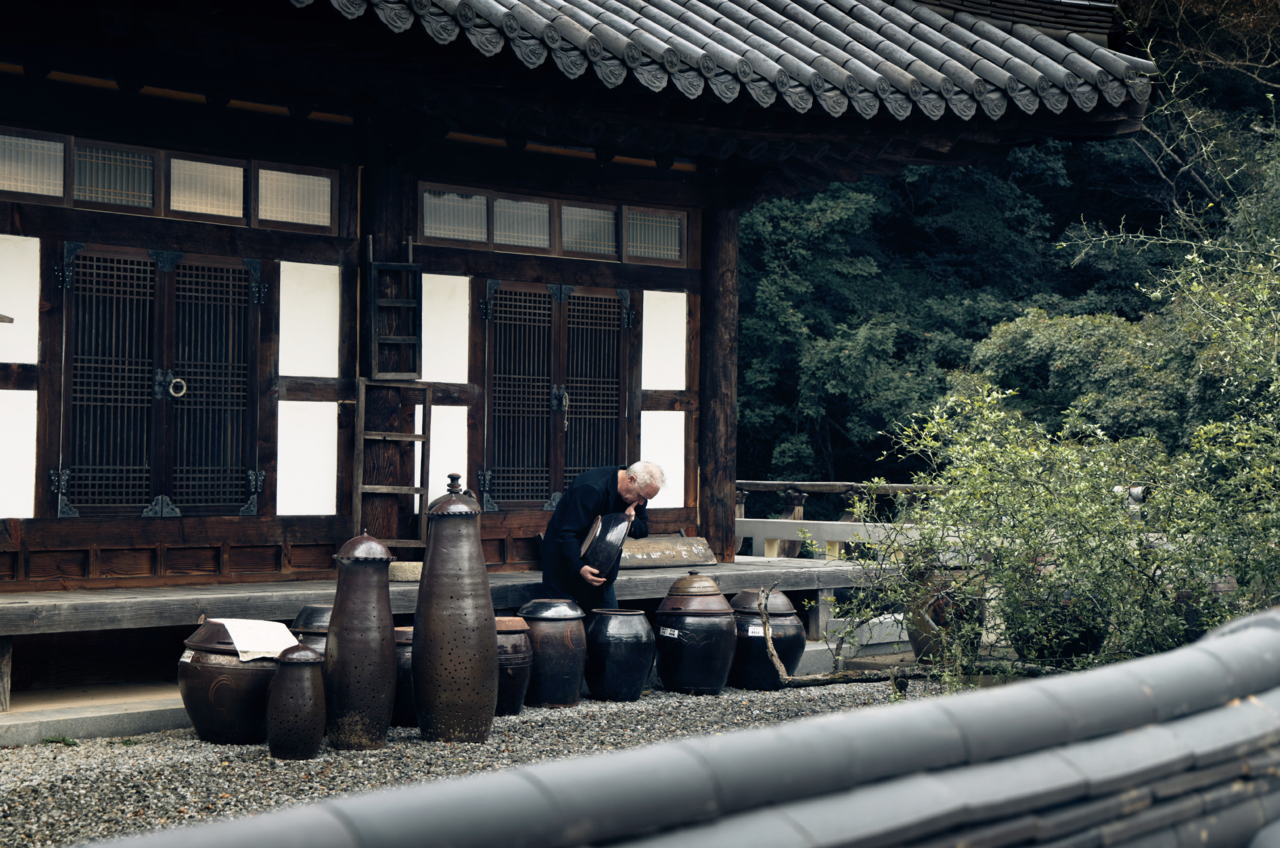
Dozens of jang crocks of different sizes stood at one side of the hermitage. After the meal, Ferran walked over to them. He lifted each lid, checked the color, and smelled what was inside.
Around the same time, this reporter and his omnivorous companions had a sanchae jeongsik — a set meal of wild greens — at a restaurant at the foot of the mountain: grilled flounder, haemul pajeon (seafood-and-scallion pancake), and various namul. The regret of missing a glass of soju was consoled on the way home. At the nearby Jeongeup station, someone was selling takju brewed with local rice. A tasting glass slipped down like wine — sweet and rounded.
In an interview with this magazine last year, Chair Choi spoke about the “industrialization of hansik.” She singled out Korean-style meat grilling — “Korean barbecue” — where no part of the animal is wasted and meat is eaten with vegetables. Showing guests the raw meat before it hits the grill, then cooking it in front of them, is part of the theater, she said. If those elements were branded as “Korean gastronomy,” the industrialization of hansik would follow.
Industrialization here means more than simply growing restaurant revenues. It means raising the visibility and value of Korean ingredients so that agriculture, livestock and fisheries can grow with it, and lifting hotels and tourism — the industries that let people experience hansik — along the way.
The idea, in fact, came from Ferran. In 2007, Chair Choi went to work at El Bulli and at the Alicia Foundation, the research foundation Ferran founded. Ferran said he remembers her as “kimchi.”
He is widely credited with pulling Spanish gastronomy into the center of the global culinary world. His restaurant El Bulli received 2.5 million reservation requests a year worldwide; only 8,000 people ever tasted his cooking. Building on his own gastronomic research, he uncovered new recipes and ingredients and created a “gastronomic economic ecosystem.” In 2023, that ecosystem accounted for 27.4% of Spain’s gross value added. The Spanish economic newspaper Cinco Días wrote that “Spain owes a great debt to Ferran Adrià and the El Bulli phenomenon.”
Research was central to his work. Every year he closed the restaurant for six months to develop new dishes. In 2011 he went further, founding a dedicated research foundation focused on ingredients and nutritional science.
So the question — put at some length — was this: “A year ago, meeting Chair Choi opened my eyes to the possibility that in Korea, ‘gastronomy’ could grow into a major industry within the economy. But in Korea, hansik is thought of as traditional ‘cooking,’ not as something to be researched. How does one begin ‘gastronomic research’?”
Ferran, hollow-eyed, opened his answer this way: “The common problem in this world is that there is no agreement on terminology.” An assistant let slip that he had slept only two hours since arriving in Korea. His reply carried more fatigue than that.
“You are asking about the gastronomy industry, but really you are asking about the ‘food (alimentation)’ industry. Eating is an act of survival. Gastronomy is an act of pleasure. In the Spanish economy, gastronomy accounts for only about 5%. It is ‘food’ as a whole that is 27.4%.”
He turned the question back: “What is the cooking you are talking about?”
“Humanity has always studied cooking. And no human activity has generated as much economic value as cooking has. Without cooking, there would be no reason for agriculture or livestock farming. But the research done by big companies and the research done by high-end gastronomic restaurants are two completely different worlds.”
The reporter was left speechless. Never mind the method of industrializing hansik — even naming what “hansik” is felt suddenly distant.
To the dazed listener he said, “Without an objective standard, it is just ‘blah blah, blah blah.’” He waved his hand and repeated: “Blah blah, blah blah.”
Spain’s 27.4%

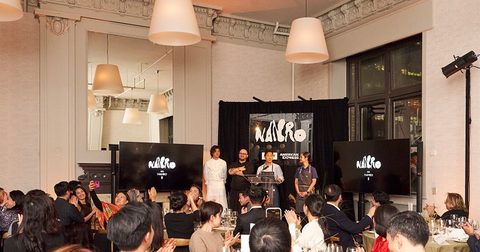
Three days later, on October 29, he visited Samcheonggak in Seongbuk-dong, Seoul, where the 2025 Hansik Conference — hosted by Korea’s Ministry of Agriculture, Food and Rural Affairs and the Korean Food Promotion Institute — was being held. Alongside Ferran, speakers included Toni Massanés, director of the Alicia Foundation, Chef Kwon Woo-jung of Kwonsooksoo and Chef Mingoo Kang of Mingles. Some 400 chefs, researchers and industry figures from Korea and abroad filled the seats.
Across the day, Ferran was closer to a headline act than a guest. He appeared in three of four sessions and, with a whiteboard in tow, spent more than two hours explaining his philosophy.
He liked to open “from an economic point of view” — his rhetoric for governments, universities and the public. “If you say, ‘Gastronomy is beautiful and wonderful, so it should be supported,’ nobody listens. But if you say, ‘Food accounts for 27.4% of GDP,’ then people start to listen.”
Spain’s 27.4% is comparable to the weight of manufacturing in Korea (28.9%).
The figure comes from a report titled Spanish Gastronomy: Economic Impact and Trends of a Key National Industry, released in January by KPMG and the Real Academia de Gastronomía. According to the report, Spain’s food sector generated €375 billion (about 636 trillion Korean won) in added value in 2023 and supported roughly 7 million jobs — two-fifths of the country’s employment.
The report describes this food sector as the “gastronomy sector,” with restaurants (food and beverage services) as one subsector. Together with agriculture, livestock and fisheries, food and beverage exports and hotels, they form what the report defines as “the economic ecosystem of gastronomy.”
The strongest growth came from food and beverage exports. Spanish F&B exports rose 88% from €35 billion in 2013 to €66 billion in 2023 — equivalent to 17.4% of total exports. Volume rose, but so did value. Export unit prices climbed 67% over the same decade, from €1.2 to €2.0 per kg. In 2023, Spanish F&B products held their own against neighbors: the European average was €1.48/kg, Italy €2.38/kg, and France — Europe’s largest agri-food exporter — €1.30/kg.
“Backed by these numbers,” Ferran said, “Spain’s national ministers and the Catalan regional government began, for the first time, to understand that gastronomy is a driver of the economy.”
Peru is another country where food carries enormous weight. When asked what makes them proudest of being Peruvian, Peruvians put “cooking and gastronomy” first — 45%, according to a 2020 Ipsos poll. Ferran marveled that “there, small children wanted to become cooks, not football players.”
From 2002, Gastón Acurio — who ran his restaurant Astrid & Gastón in Lima — traveled across Peru meeting small farmers and cooks, uncovering local ingredients and the recipes built around them. As a result, quinoa — a traditional Peruvian grain then “rotting in the fields because no one would buy it” — was rebranded as a nutritionally near-perfect superfood. In 2009, Acurio launched his own gastronomic fair, Mistura, to showcase what he had found and to develop dishes using them in fine-dining restaurants. Beyond quinoa, native Peruvian potatoes and cacao were transformed into premium varieties.
As his work took hold, Peruvian restaurants began appearing on global gastronomy lists. Central entered the World’s 50 Best Restaurants (W50B) at No. 50 in 2013, and ten years later, in 2023, reached No. 1. Four Peruvian restaurants made the 2025 list. The Inter-American Development Bank (IDB), in a 2022 report on innovation in Peru’s gastronomy sector, called this arc the “Peruvian gastronomic revolution.” The IDB defined “gastronomy industry” narrowly — covering only lodging and food services — and found that from 2000 to 2019, its average annual growth (5.1%) exceeded that of the wider economy (4.9%).
As Spain and Peru show, the fruits of the food sector are substantial. For Ferran, however, such numbers are the outcome of effort, not the goal. They are, above all, “rhetoric to make people listen.” As he has done for more than 40 years — first at El Bulli and later at his foundation — Ferran keeps gastronomic research at the center. Gastronomy came first; the food industry followed. The same holds for hansik.
Korean Cuisine
The French composer Bruno Mantovani tasted 35 dishes at El Bulli in 2007 — and later wrote music, he said, thinking back to that meal.
“The way salty and sweet, seafood and meat, vegetables and flesh combined was already, in itself, a perfect drama. From the very first moment there was illusion. The olive esférico that opened the meal set a visually recognizable object — an ‘olive’ — against an unexpected ‘interpretation’ of it. In reality it was an olive visually reconstructed: pressed olive juice enclosed in a thin green gelatin membrane. Form and taste were in harmony, but the texture was astonishingly new.” (Jean-Paul Jouary, The Philosopher at El Bulli, 2014, p. 153.)
In both the interview and the lectures, Ferran devoted much of his time to the principles of knowledge — “how one extracts knowledge from information, and gives that knowledge concrete form.”
Yet there seemed to be an empty space in his explanations. After a long account of the principles of knowledge, he would jump straight to the education needed to industrialize gastronomy. What was left blank in between was any account of “what gastronomy is” — a striking omission, given his insistence that “gastronomy and food are not the same.”
The French philosopher Jean-Paul Jouary offers a clue in The Philosopher at El Bulli, in which he describes fifteen years of dining at El Bulli and watching Ferran work.
Existing gastronomy, Jouary argues, is subordinated to “orders” and “recipes”; Ferran’s work, by contrast, comes closer to “creation.” “The customer is often said to be king,” he writes. “This means it is the customer who decides what to eat, and in what order. The customer ‘orders.’ In the wake of the French Revolution, fine restaurants proliferated and Russian-style service became the norm; that is how it happened. Gastronomy could survive and evolve only in relation to orders, recipes, customers’ tastes and prescribed sequences. But for a dish to be an original work, it needs customers who are captivated by it — and at the same time must renounce the intent to satisfy their expectations. […] Ferran Adrià was the first to overcome this contradiction and satisfy both criteria.”
Jouary then reviews the “creative” gastronomic research he observed at El Bulli: “gathering cooking methods, ingredients and cultural conventions from around the world,” then “preserving the existing concepts of cooking while going beyond them — sometimes taking them apart.”
For Ferran, in other words, gastronomic research is itself the process of producing new knowledge. Following existing orders and recipes on the assumption that “gastronomy must be like this” is not, in his view, gastronomy at all.
He explained the paradox this way in his lecture: “I might think that when I eat asparagus, it should taste like asparagus. But that is exactly the blind spot of nouvelle cuisine.” His own olive esférico — the dish the French composer had tasted — is a good example. It kept only the concept of the olive — a green sphere — while filling it with entirely new material.
Ferran urged that Korea attempt the same, citing its long history, abundant ingredients and sufficient economic base. “Korea has really wonderful ingredients (productos) — vegetables, seafood, meat. That is a huge strength. Without good ingredients, you would have to import everything. Korea has potential.”
He argued for research in the sense of deconstruction and reconstruction, offering kimchi and its insistence on red chili powder as an example. “I asked a chef, ‘Why is kimchi always made with red chili powder?’ He answered, ‘That’s just how it is.’ But ‘always’ is not true. Chili peppers arrived in Korea much later. Chili is not Korean; it is from the Americas. Tradition should be protected — but it must not become a reason for distorting the truth.”
New knowledge, he added, begins by collecting and classifying existing knowledge. “There is a Spanish saying: ‘Before you invent black powder, you first have to know the powder that already exists.’”
Ferran also suggested trying a set of questions: “Is there an ingredient that has never been processed? What ingredient exists only in Korea, and nowhere else in the world? And what techniques exist only in Korea?”
Finally, he said, hansik has to fix its terminology. “When foreigners come, insist on ‘Korean Cuisine’ — not ‘Traditional Korean Food.’ Only then does an identity emerge.”
Ferran’s present, hansik’s future
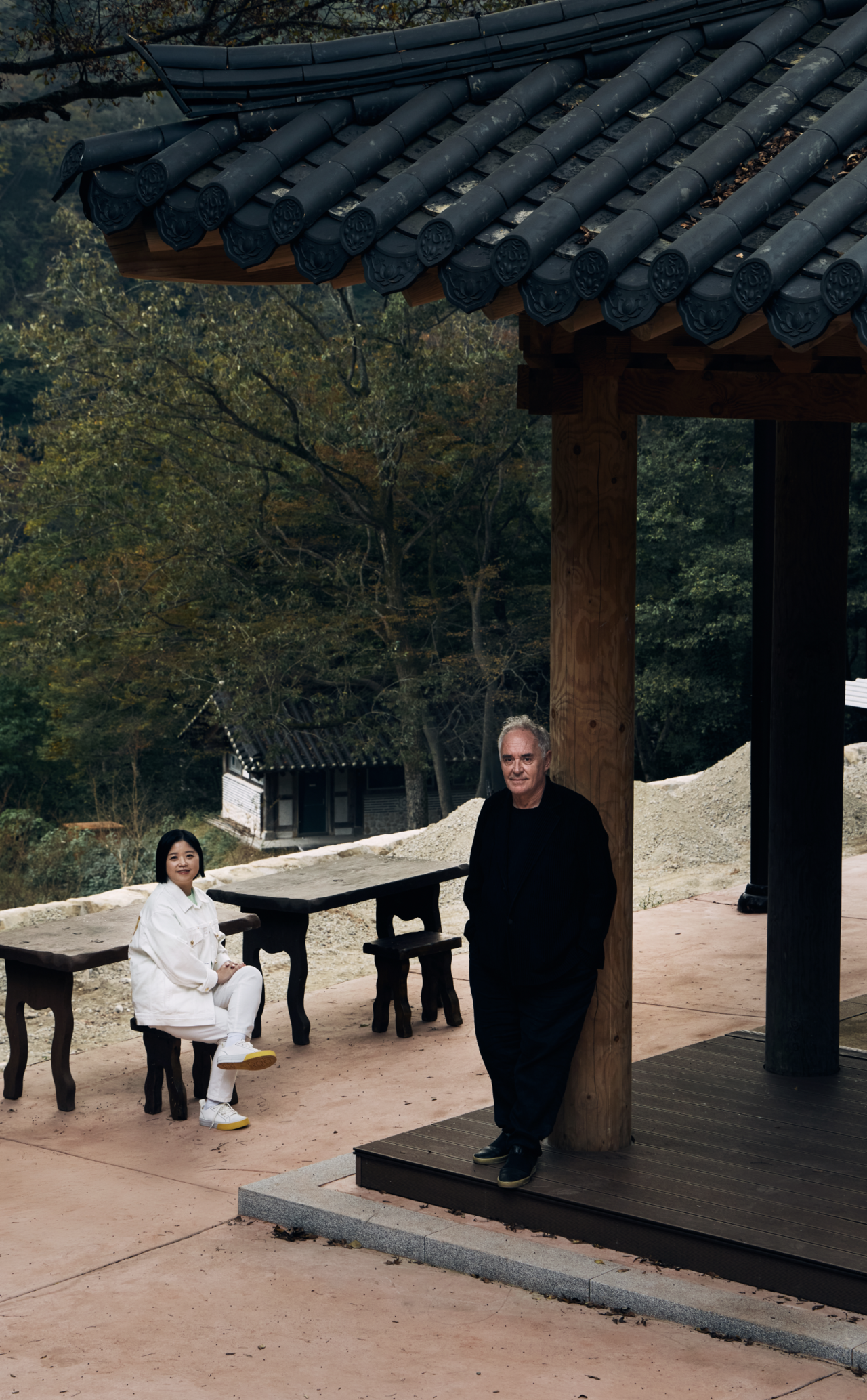
Choi Jung-yoon: “Eighteen years ago, working at El Bulli and the Alicia Foundation, I saw how Spain rose to the top of the world. Honestly, I went out of curiosity. When I first started learning to cook, I only knew about French and Italian cuisine — not Spanish. So I went to see for myself: how did Spain grow like that? I especially wanted to see how it worked step by step, with a strategy — particularly in research and education.”
Ferran Adrià: “Hold on. That’s not right. Spain had no strategy. It’s barely an exaggeration to say we received no government support at all. What we had was not strategy — it was talent. Ferran Adrià, Andoni Luis Aduriz (chef-owner of Mugaritz), and Joan Roca (chef-owner of El Celler de Can Roca). In football terms, we were players like Messi and Neymar.”
— From a dialogue at the 2025 Hansik Conference, October 29.
Back at Cheonjin-am. Setting aside the terminological muddle, the next question was how the branding of Spanish gastronomy had been possible. The reporter expected an answer about government strategy and institutional support. Again Ferran’s answer swerved. “Briefly? This is thirty years of my life. It is a very complex subject.” He glanced at his watch. “Above all, you need talent.”
Spain, he said, had people with the right gifts. “There are plenty of countries with a lot of money. But no matter how much money there is, if you don’t have seven or eight extraordinarily gifted individuals, change does not happen.”
Given talent, Ferran turned to education. “The question is: what ‘measures’ can we take? We cannot control talent itself, but we can design the environment and conditions in which it is expressed.”
He described education along two axes. First, institutions must go beyond teaching cooking techniques and be capable of gastronomic research. He drew a distinction between learning how to make kimchi and “making the best kimchi in the world.” “I don’t know how to make kimchi. But give me a recipe and in four days I’ll be able to. Of course not as well as someone who has done it for years. Cooking is practice. That’s why it looks easy on the surface. What is truly hard is the head. If you don’t think properly, you can’t cook well.”
Second, education must be interdisciplinary — coupled with fields like the life sciences and business management. He pointed out that “even in Spain there is no restaurant management education. In Spain, six out of ten restaurants don’t survive five years. Italy is the same. What is the biggest problem? They don’t manage their budgets. They know nothing about business.”
Neither of these needs, he argued, can be met by a cooking school. What is required is a university capable of gastronomic research and interdisciplinary teaching. He pointed to Basque Culinary Center (BCC), founded in 2011 as Spain’s first four-year university dedicated to gastronomy, where he said 50% of the curriculum is business management. Alongside BCC, he cited the Madrid Culinary Campus (MACC), which opened in 2024 with his involvement, and GASMA, founded in eastern Spain in 2014, as Spain’s specialized gastronomy universities.
“In the U.S., there are none,” he said. “CIA is not a ‘university’; it is a cooking school. Japan is the same.” And, he added, “without a university like this, Korea will never become a truly world-class gastronomic country.”
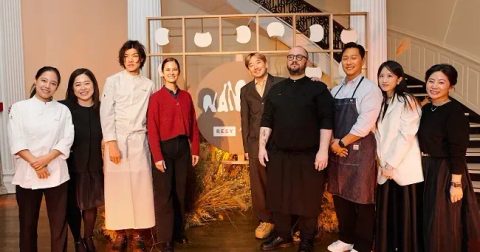
Chair Choi Jung-yoon — Ferran’s “kimchi” — began preparing that educational infrastructure in Korea in 2023, launching the non-profit Nanro Foundation to develop hansik talent. Nanro now brings together more than 400 professionals from hansik and other industries — IT, media, finance and more. With them, she launched the global hansik conference NANRO INSIGHT and the research and education program NANRO Academy.
On October 30, days after Ferran’s visit, she launched NANRO NEXT, a scholarship program for hansik talent. The plan is to select 20 people across Korea and the U.S. over the course of a year and provide structured education and mentoring. Its advisory committee — responsible for planning and selection — includes Kim Ah-rin, CEO of Be My Guest; Chef Kim Hee-eun of the hansik restaurant SOUL; and Chef Jung Ji-sun of the Chinese restaurant Tian Mimi.
The board of advisors includes Chef Cho Hee-sook of Hansik Gonggan (widely regarded as the “grande dame of hansik”), Ven. Jeong Kwan, Lee Sang-hoon of TPG Korea, and NICA (NANRO International Chef Advisors) members — Chef Park Jung-hyun of Atomix, Chef Virgilio Martínez of Peru’s Central (W50B No. 1 in 2023) and Chef Oriol Castro of Spain’s Disfrutar (W50B No. 1 in 2024).
In her dialogue with Ferran, Chair Choi said, “Of course the research will not stop. But I have come to think that carrying that research out is what really matters.” Carrying it out, in her telling, meant education.
· Original (Korean): fortunekorea.co.kr