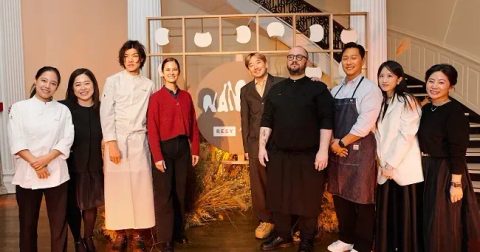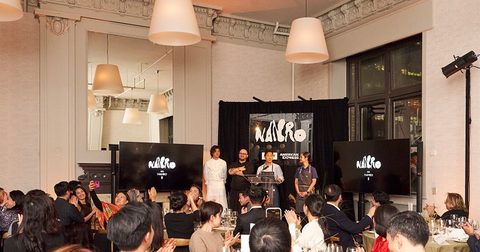
Nanrohoe (the Nanro Society) began as a small gathering that shared a love of good food. It soon grew into a space for asking questions and thinking through hansik. Today, Nanrohoe is a non-profit organization that researches Korean cuisine, discusses its globalization and cultivates the next generation. Its chair, Choi Jung-yoon, hopes hansik will move beyond a passing craze or an exotic experience — settling naturally into the world’s food cultures as something long loved.
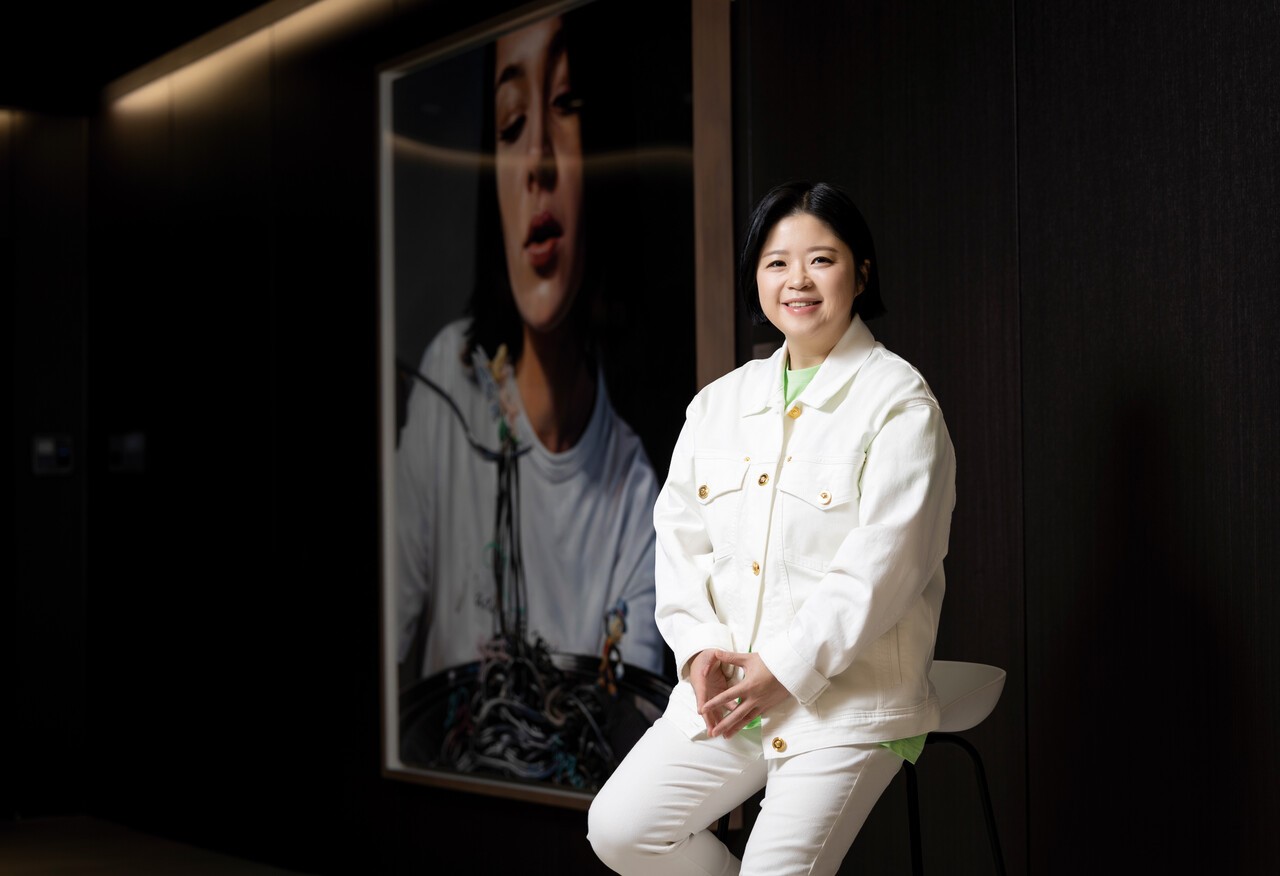
“Nanrohoe” (煖爐會) was a winter gathering of Joseon-era literati in the 18th century — scholars sharing food and pleasure around a charcoal brazier. The custom, once seen across Hanyang (old Seoul), is recorded in Dongguk Sesigi, and King Jeongjo is said to have enjoyed such gatherings with Silhak scholars including Park Ji-won and Jeong Yak-yong. The person who has revived the Nanrohoe in the modern day is Choi Jung-yoon, chair of Nanrohoe and Nanro Foundation. A chef and hansik researcher for 28 years, Choi worked as a hotel chef before beginning her culinary research at Spain’s El Bulli and its scientific research arm, the Alicia Foundation. She now leads Sempio’s Woorimat Research Center as head of research.
Nanrohoe hosts NANRO INSIGHT, a forum for global food-business insight, and — in a collaboration with Helinox — released a piece of camping cookware called the “Jeonripto & Stove One” that allows meat-grilling and stew-cooking at the same time. Nanro Foundation selects a cohort of NANRO NEXT fellows each year, the next generation who will lead K-gastronomy. Kim Ji-won, CEO of Hansae MK and a friend of Nanrohoe, praises Choi’s drive and planning ability. “Whenever I meet her,” Kim says, “I come away with fresh energy.”
“You’ve been a chef and hansik researcher for 28 years. What first drew you to cooking?”
The direction of one’s life changes with the people one meets. From an early age I was strongly influenced by my parents and chose the path of a cook. My father was an architect — a real food-lover with a sensitivity for photography — and my mother had a wonderful hand in the kitchen. My memories of eating and cooking with family led naturally to my choice of profession. That said, I think cooking is truly hard on both body and mind. I’ve been through insults, harsh language and being dismissed in kitchens around the world. It forced me to become tougher. Many people give up along the way, but once I decided that “I will do this for the rest of my life,” I have never regretted it — not once.
“Was there a moment when your focus expanded beyond technique — toward research and food culture?”
There is a joy in eating with others, but when you cook professionally, even that dulls at some point. If I had cooked only inside my own kitchen, I probably would never have thought deeply about what cooking is in human life, or what value it carries. After working in Australia and at the Chosun Hotel, I asked myself, “What does the best in the world look like?” and went to El Bulli in Spain. My life changed there. I moved beyond a period fixated on technical polish, and at El Bulli and the Alicia Foundation I learned the possibility that “a single chef can change food culture and industry.” That led me to want to study “how to improve the way people eat.” Korea had no institution to support that work at the time, so I came home and worked as the first head chef of Jungsik, before finding a connection with Sempio. There I applied the El Bulli methodology to hansik and began the “Jang Project.” We then carried out joint research with Alicia, launched Yeondu Culinary Studio, expanded into China and New York, and rebranded from a distinguished fermentation house into a company shaping hansik culture as a whole. Today I lead Sempio’s Woorimat Research Center and continue that research.
“Korean restaurants are proliferating quickly overseas, especially in New York. How is hansik being perceived in the global market?”
Right now the popularity of hansik feels sky-high. It was 16 years ago that I joined Sempio and started thinking about the hansik industry — and back then I couldn’t have imagined a day when hansik would draw this much attention worldwide. It’s astonishing that among the three Michelin three-star restaurants in New York, one is a Korean restaurant — Jungsik. And this year, the No. 1 restaurant in all of North America on the World’s 50 Best list is another Korean restaurant, Atomix. It genuinely feels like a dream. Of course there is still a view that hansik is something exotic to be eaten only on special occasions. But if the strengths of hansik — the health of its fermented foods, the abundance of its banchan culture — are communicated properly, I believe it will be embraced as everyday food, too.
“How did Nanrohoe come about?”
Nanrohoe began while Chef Park Jung-hyun of Atomix and I were preparing a book together and asking ourselves, “What more can we contribute to hansik?” We were also concerned that although the hansik industry was growing rapidly abroad, there was too little space at home to actually discuss it. In 18th-century Joseon, “nanro” gatherings were where everyone from commoners to the king would grill meat together, and where Silhak scholars like Jeong Yak-yong and Park Ji-won debated a new era. We felt the hansik industry today was at just such a turning point, and that meaningful change would come if the right people came together to talk.
Nanrohoe started in February 2022, in the middle of the pandemic, with seven people. We considered Korean barbecue, with its commercial potential comparable to sushi, and discussed whether it could grow into a global industry. We concluded that collaboration across culture, finance, branding, science and other fields would be essential. Along the way, we came to see the importance of standardization, respect for craft and talent development — and, prompted by our private certification “Nanro Grill Master,” we first set up a for-profit entity and later converted it into the non-profit Nanro Foundation. The core was people — cultivating them — and we believed the hansik industry needed the foundation of a “school.” We began without a business plan; on November 29, 2025, we marked our second anniversary.
“What projects is Nanro working on now?”
Our first public step, in April 2024, was NANRO INSIGHT at the Leeum Museum of Art. After the event we thought harder about “what path Nanro should take.” Believing that research cannot be faked, we began with Nanro Lab and NANRO Academy. Concluding that setting up a school in Korea would be difficult, we then looked to non-profit foundations and the fundraising ecosystem in the U.S. and established a U.S. foundation. Park Jung-eun of Atomix became its president, and we launched the fellowship program. In Korea, we identify talent and support them with startup capital and mentoring. Our first scholarship recipient is Chef Lee Ha-sung, a former head chef at Atomix, who will open his own restaurant next year. In the U.S., we also invited four up-and-coming chefs to Korea for training. If they take what they learned and apply hansik to their own menus, I expect it will build a strong culinary community in the U.S. My goal is a virtuous cycle in which Nanro fellowship alumni grow up and then help the next generation in turn.
“What surprising data or insights emerged from your research project on ‘the science of Korean meat-grilling’?”
Through Nanro Foundation’s first research project, “The Science of Korean Meat-Grilling,” we confirmed that there are rational principles hidden inside the way Koreans grill meat. We scientifically showed that the slope and groove structure of a samgyeopsal grill plate is an optimal design that drains excess fat while preserving the flavor. Building on that, we developed “Oil Road” technology — improved oil flow and heat distribution — and codified everything, down to the grill angle and heat control, into a manual. The value of the research was in accumulating, as science, a meat culture that had been treated as intuition. To bring it into practical use, we partnered with Helinox and released the “Jeonripto & Stove One” in the second half of 2025.
“You are also the Korea chair of the World’s 50 Best Restaurants. In 2025, Korea was elevated to a stand-alone region, separated from China. What does that shift mean?”
Until 2024, of the 27 regions in the World’s 50 Best system, only France, Italy, Germany and Japan were designated as single-country regions. This year, Korea and China were promoted to independent regions. That is a mark of the rising stature of hansik. It means that the global culinary world recognizes Korea as a region in its own right. Restaurants that previously received little attention now have far more chances to stand in the global spotlight. And for two years in a row, the Asia’s 50 Best awards ceremony was held in Seoul. This has given the Korean dining industry great confidence. Our chefs now feel a positive kind of tension — “the world is watching” — and a healthy competition to develop hansik further has been sparked. Promotion to an independent region feels like an honor and a heavy responsibility at once. Korean chefs and industry figures are playing a major role in showing the world the diversity and quality of Korean gastronomy.
“Is there a case from the W50B process that most stayed with you?”
I saw firsthand that a single restaurant can change a country’s standing. The most striking case I have watched at the World’s 50 Best is the miracle El Bulli built in Spain. Just a few decades ago, if you thought of a great gastronomic country, you thought of France or Italy — but the emergence of Spain’s El Bulli in the 1980s changed the picture. A small restaurant on a quiet stretch of coastline, with the innovation of molecular gastronomy, took the world’s No. 1 spot five times in the 2000s alone and held three Michelin stars for 14 years. It became a “sacred site” where 2.5 million gourmets around the world queued up. That effect elevated the standing of Spanish cooking and made an enormous contribution not only to tourism but to the wider economy. I saw the change on the ground; the line that “one restaurant can change a country” was not an exaggeration. Spain’s El Bulli, Denmark’s Noma, France’s Mirazur, Peru’s Central — each is an innovation case that entirely reshaped the gastronomic landscape of its region. Watching these scenes over the last 20 years, I began to dream that Korea, too, will surely do the same.
“What goals or dreams do you most want to see realized going forward?”
If I am to speak of a personal goal and a dream: I want to see hansik go beyond a passing trend and take deep root in the world’s food cultures. I often say, “I hope the day comes when foreigners enjoy banchan as everyday food, too.” The thought of kimchi and jangajji — no longer special dishes, but basic elements on the world’s tables, like bread or cheese — moves me just to imagine. Someday I would also like to design meals for astronauts using hansik. I believe food is the last line of defense that can help people in extreme conditions. If Korean fermented foods can become nutrition that saves lives in wars, disasters, or in space, how meaningful that would be. I believe in the power of food, and I look forward to a day when dreams like these come true — a day when hansik makes not only the earth but even space a happier place.

· Original (Korean): forbeskorea.co.kr