There is a scene that shows up in every K-drama, without fail: actors eating, and eating with obvious pleasure. Watch enough of it, and you start wondering what that food is. Sooner or later, you want to try it.
The overwhelming influence of K-dramas is by now a global phenomenon you do not need to be a Netflix executive to notice. K-drama has been a major reason hansik has spread abroad at an unprecedented pace. Yet a wave that goes beyond mere curiosity — a wave that keeps getting stronger — can only be sustained if there is something compelling in the food itself.
In a recent feature on the rise of Korean restaurants in the city, The New York Times went so far as to write that Korea had “ended the decades-long era of French fine dining.”
Beyond its well-known reputation as “healthy food,” hansik draws foreign diners in through its layered flavors and the very way it is eaten — the distinctive sauces born of fermented jang, its complex-yet-balanced taste, and the shared-table food culture at its center.
The first key to hansik’s distinctive taste is its sauces. On this point, the Spanish outlet 20 Minutos ran a curious piece under the headline “Why don’t Koreans use tomatoes in their cooking?” Across the Western world — France, Italy and beyond — tomato sauce is a staple, alongside dairy such as butter, cream and cheese, and meat stocks. It is one reason many Western dishes end up in a similar flavor register.
Korea, by contrast, builds its base flavors on fermented jang: gochujang, ganjang, doenjang, ssamjang. “Instead of tomatoes,” the outlet noted, “Korea has more than enough fermented sauces such as gochujang and ganjang.”
Fermented jang delivers not one flavor but a whole layered profile — meaning a single sauce can produce a wide spectrum of tastes. Some experts argue that Koreans eat unusually large amounts of vegetables in part because jang makes vegetables so appetizing. Even “K-chicken,” conventional fried chicken glazed in gochujang seasoning, has become a global hit. To foreign diners, the richness of hansik registers as a form of gastronomy they simply have not tasted before.
Within all that complexity, what matters most is balance. Only when varied flavors sit in harmony does a meal become gastronomy. Gimbap and bibimbap are textbook examples.
Hansik pursues that balance not only inside a single dish but also across the whole table. Koreans are a people who take pairing seriously; there is an instinct for combining flavors in harmony. A single spread carries spicy, sweet, savory, bitter, salty, sour, clean and rich notes at once. Alongside a spicy kimchi jjigae you find a mild rolled egg, nutty gim, salty grilled mackerel, and a lightly bitter seasoned namul, all in dialogue with one another.
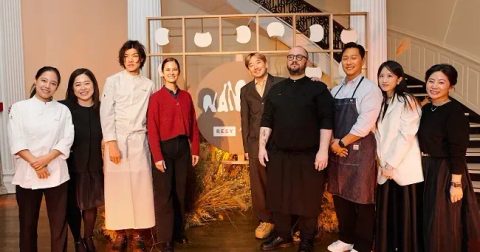
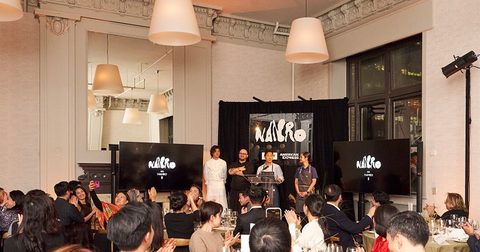
“The most distinctive feature of hansik is the aesthetic of harmony,” said Chef Choi Jung-yoon, Chair of the Nanro Foundation, a non-profit devoted to taking Korean food global. “A variety of dishes are placed on one table, and although each has a different flavor, together they create a remarkable balance. That harmony is what non-Korean diners find so appealing.”
The Korean flair for pairing is visible in anju culture, too — the food set out to go with drinks. Koreans pair the perfect dish to whatever they are drinking, and few regions have developed anju to the variety Korea has. “There is a whole separate list of dishes to pair with soju, makgeolli or beer,” the American outlet Tasting Table observed, adding that the sheer range of Korean anju is “simply not comparable” to what the West offers.
This instinct also surfaces in how Koreans eat non-Korean food — pairing on toppings to fill in whatever the dish is missing “by just a little.” Pizza gets topped with bulgogi and buldak, and to make up for a shortfall of sweetness, sweet-potato mousse is piped around the crust. A hot dog gets sugar, mustard, ketchup and cheese piled on together. Rich fried chicken pairs with sweet-and-spicy sauce and tangy pickled radish — and, of course, a slightly bitter beer. Reborn in the Korean idiom, these hybrid foods are winning over foreign palates and are now being exported back abroad.
Nor can you talk about hansik without its culture of sharing — ladling soup into someone else’s bowl, passing banchan around, wrapping a bite of meat in a lettuce leaf and handing it over.
Just as Korean noticeably favors the collective pronoun uri (“we/ours”), Korean society carries a strong sense of community. That translates directly to the table: rather than plating each dish individually, Koreans have developed a broad repertoire of shareable food — jjigae, banchan, jeongol.
Even the Korean barbecue that is taking off overseas contains this quiet aesthetic of sharing. Everyone gathers around a central grill and cooks together, and out of that comes an atmosphere in which the whole table feels like one thing.
“The way you ‘eat together’ — sharing food — can shape taste itself,” Chef Choi added. “Our culture of sharing carries a harmony between communal life and the individual.”
· Original (Korean): realfoods.co.kr