![극악 웨이팅으로 악명 높은 ‘이 곳’…모던보이와 모던걸이 몰린 이유는 [푸디人]](https://stage.nanrofoundation.com/api/media/file/press-e9d03753f6f4-1.png)
[Foodie #39] Mongtan (feat. Nanro & Stella Artois)
Amid a stretch of steam-bath weather that had bodies and minds worn down, an unusual chance arrived to enjoy a cold beer and one of Seoul’s most reservation-choked restaurants at the same time. Belgian premium beer brand Stella Artois joined forces with Korea’s leading gourmet community, Nanro, to host a special dining event at Mongtan in Seoul’s Yongsan-gu.
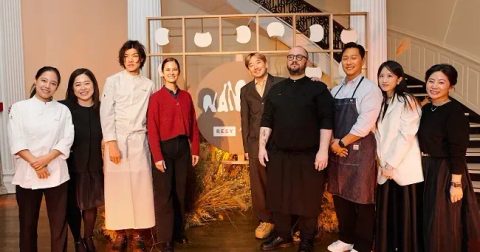
Attendees included food influencers such as “Mattagoras” Ahn Yun-se and “Bitter Fan” Han Chung-hee, along with Michelin-starred chefs Joseph Lidgerwood, Kang Min-chul and Kim Hee-eun — figures at the front line of Korea’s dining culture. Members of the Stella Dining Club, Stella Artois’s private gastronomic community, also turned up in a “modern boy and modern girl” dress code, lifting the mood.
Mulhoe to open the palate, wodaegalbi for bliss

The centerpiece of the night was jeollipgol (氈笠套骨), the earliest ancestor of Korean hot pot. Jeollip refers to the beonged-shaped hats worn by Joseon-era soldiers; go means to combine many things. Flip the hat upside down, fill it with meat, vegetables and other ingredients, and cook — that is jeollipgol, the beginning of Korea’s jeongol tradition.
According to Dongguk Sesigi, a record of Joseon seasonal customs, a gathering called nallohoe (煖爐會) flourished in the late Joseon period. It was a wintertime meeting where friends sat around a warm brazier to enjoy food, typically on the first day of the tenth lunar month.
The book records that in 18th-century Seoul and Gyeonggi, on the first of the tenth month, people would light charcoal in a brazier, place a beoncheol (griddle) on top, season beef with oil, soy sauce, egg, spring onion, garlic and pepper, and grill it while seated around the fire. Beef or pork mixed with radish, cucumber, greens and egg would be simmered together as hot pot — a dish they called yeolgujatang or sinseollo.
As Seong Hyeop’s painting shows, the way our ancestors enjoyed jeollipgol is not so different from how Koreans today head to a valley or the seaside to grill samgyeopsal on a portable pan.
The event added a twist to the classic. Where the meat would normally sit, the grill area held raw fish — including minaeo (croaker) — and various seafood, while the inner well, meant for simmering broth, was filled with chilled mulhoe (cold raw-fish soup). Serving raw fish at Mongtan, famous for its beef ribs, was itself a surprise; swapping simmering broth for cold soup on a sweltering summer day was inspired.

Next came Mongtan’s signature wodaegalbi (dry-aged, straw-smoked long-cut beef ribs) alongside ox tongue. The straw-smoked rib meat, glazed with a sweet marinade, is especially beloved by younger diners. The tongue was cut as thick as a filet mignon — a chewier bite than the paper-thin slices you usually see.
Within the wodaegalbi, my personal pick is the intercostal meat. Attached to the rib bones, it has a springy chew and enough fat to release a nutty flavor the longer you chew. At Mongtan, the rib eye is stripped off and grilled first, with the intercostals butchered afterwards — which means some diners fill up before ever getting to them. If you order wodaegalbi at Mongtan, be sure to save room for the intercostals.

Stella Artois — with its distinctive bittersweet finish and clean crispness — was a beautiful match for Mongtan’s slightly sweet ribs. Brewed with European Saaz hops, malted barley, yeast and natural spring water, Stella Artois carries an unusually rich foam that keeps the carbonation lively and holds the flavor on the palate. The beer traces its Belgian brewing heritage back to 1366 — more than 600 years.
Pouring it into Stella’s dedicated chalice glass — shaped like a goblet to protect the beer’s delicate character — is the finishing touch. If you hold the glass by the star-etched stem, the story goes, you keep the beer’s chill for longer.
A rising gastronomic community
The dinner also marked the Stella Dining Club’s first exchange dinner of the year. Held under the theme “The moment taste becomes value and pleasure,” it welcomed members of Nanro, the non-profit society devoted to taking Korean cuisine global.

Nanro’s membership brings together such names as Cho Jun-mo, chief of Mongtan; Park Soo-kyung of Geumdwaeji Sikdang (Golden Pig BBQ); and Han Chung-hee, who runs 11 dining brands including Geumtoil Champagne Bar. Also on board are Chef Park Jung-hyun and Park Jung-eun of Manhattan’s two-Michelin-starred Atomix; Chef Cho Hee-sook, hailed as the doyenne of Korean cuisine, of Hansik Gonggan; and Chef Ok Dong-sik, whose namesake restaurant was singled out by The New York Times among its best dishes.
It is, in short, a room full of F&B leaders. Launched in 2022 around Chef Choi Jung-yoon, Nanro has grown in under two years into a broad society of experts spanning restaurants, food, distribution and marketing.
Chef Choi is a hansik researcher who has built her career in Korea, Spain and Australia. After working the pass at The Shilla’s Chosun Hotel, the Hyatt and Jungsik Seoul, she has led hansik research since 2010 as head chef of the Sempio Woorimat Research Center.
Naming the society after the Joseon-era nallohoe — gatherings around a brazier — was meant to signal an assembly of “cultivated companions” that also functions as an academy: a place to exchange knowledge, sharpen food culture, and take hansik to the world.
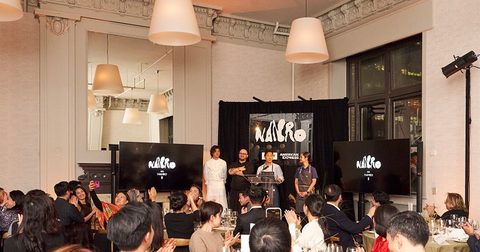
This year, Nanro also hosted its first global hansik symposium, NANRO INSIGHT. Under the theme “The Future of Fine Dining: Speaking of Hansik,” Prof. Jeong Jae-seung of KAIST’s Department of Bio and Brain Engineering delivered a talk titled “Why Hansik Research Needs a Scientific Approach.”
Prof. Jeong explained the cooking instinct of Homo sapiens through the lens of brain science and unpacked the scientific fabric of Korean cooking. Framing hansik’s strengths as fermentation, rice, and the balance of meat and vegetables, he argued that a balanced diet — not overly reliant on any single ingredient — may be a key to longevity and a way to sustain the planet in an era of climate crisis.

Stella Dining Club began in 2022 on the premise of “hosting” culture — inviting the people you care about and celebrating the value of sharing a meal.
Members meet regularly at hard-to-book restaurants, join brand-hosted events and organize their own gatherings, with more than 100 exchanges to date. A private KakaoTalk open chat run by the club keeps information flowing in real time. About 200 members across three cohorts are active, and open recruitment for the fourth cohort runs through Aug. 7 — worth a look for anyone serious about food.
· Original (Korean): mk.co.kr