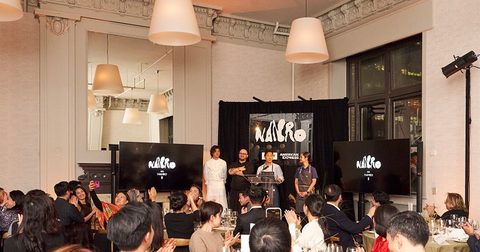
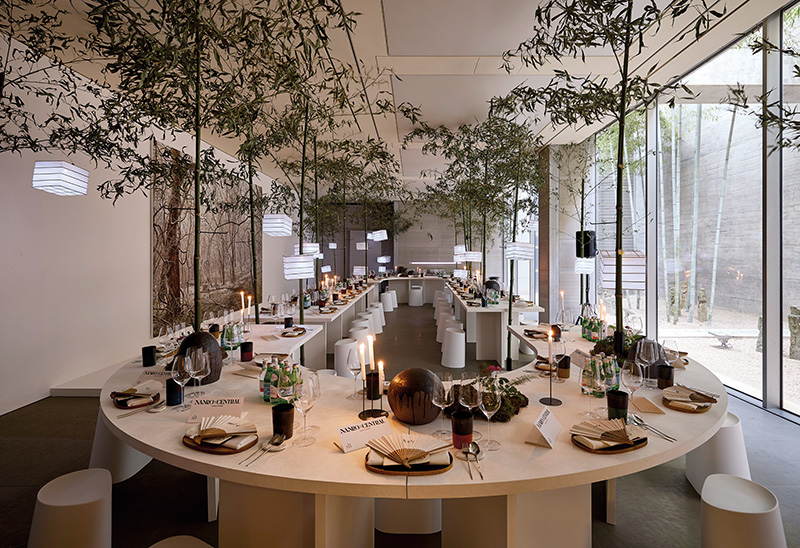
In late April, the Leeum Museum of Art auditorium hosted a two-day global hansik symposium, NANRO INSIGHT — an event built entirely around one keyword: Korean food. Two people at the heart of hansik's hottest moment talk about it here.
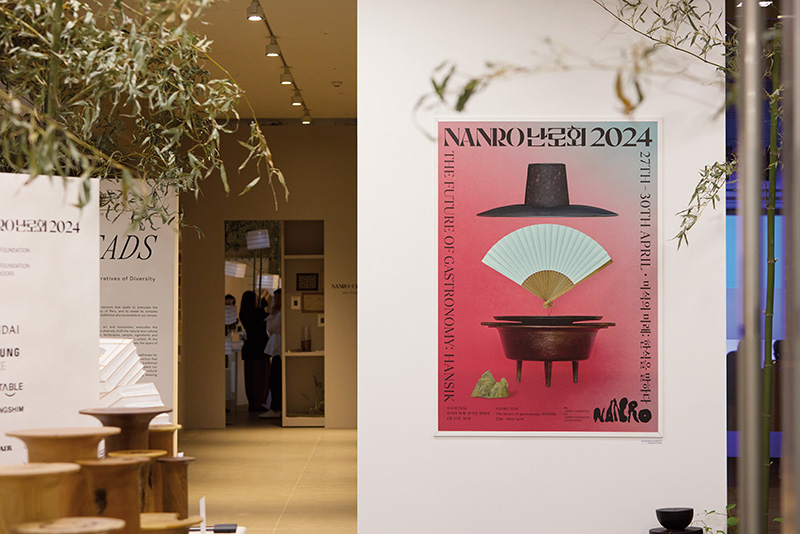
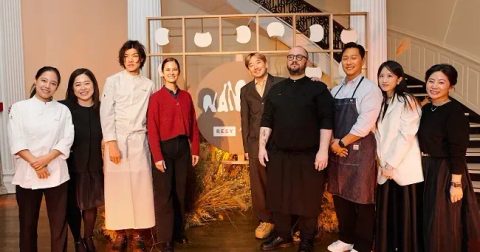
Eleven of the 71 restaurants featured in Michelin Guide New York 2023 were Korean; Atomix, New York's landmark modern Korean restaurant, was named No. 1 in North America at the World's 50 Best Restaurants 2023 (W50B). Hansik is having a moment. Yet Koreans themselves don't always know it particularly well. That is why the Nanro Foundation — a non-profit society for the industrialization of hansik, research and next-generation training — organized the global exchange NANRO 2024. Around 30 hansik practitioners and experts from academia, industry and the arts — including Chefs Cho Eun-hee and Park Sung-bae, head chefs at Onjium; Park Soo-kyung, founder and co-owner of Geumdwaeji Sikdang; and Han Choong-hee, CEO of UGD, which runs the champagne bar Geum-to-il Champagne-ppa — came together to take stock of a Korean-food industry in its prime and to look for ways to sustain its global growth. Prof. Jeong Jae-seung of KAIST's Department of Brain and Cognitive Sciences unpacked the science of hansik through the lens of fire-cooking Homo sapiens and their culinary instincts. Chef Virgilio Martínez of Peru's Central (W50B 2023 No. 1), Chef Oriol Castro of Spain's Disfrutar (No. 2) and Simon Kim, CEO of the New York Korean steak house COTE, flew in to speak directly to a Korean audience.
Chef Choi Jung-yoon, chair of the Nanro Foundation
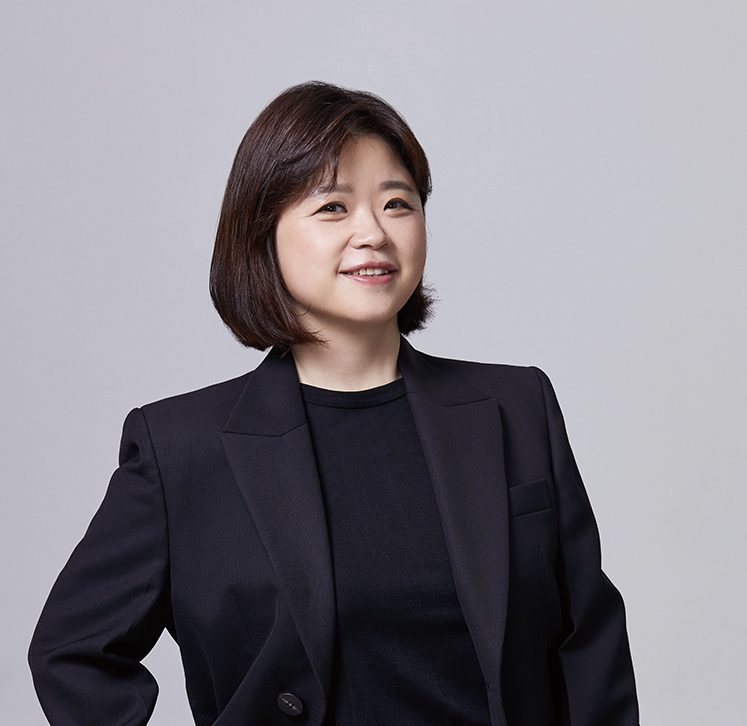
Your background at the Alicia Foundation stands out. The early 2000s were the years when Spain's elBulli was regarded as the best restaurant in the world. I was working as a hotel chef when I heard that a food-and-science research center was opening. I applied on impulse and was accepted. Chef Ferran Adrià worked beyond simple culinary research — he collaborated with industrial designers, architects, scientists, people from all kinds of fields. Talent from around the world converged there.
You came back to Korea and have been researching hansik at Sempio's Woorimat Research Center for 14 years. I was on a business trip from Spain to Korea when I met Sempio's chairman. The jang Sempio makes — ganjang, doenjang — aren't just ingredients; they are a culture in themselves. At the time, no one in Korea was approaching them that way. After I joined Sempio, we ran a jang project with the Alicia Foundation, and from there kept researching ingredients.
You also run an Instagram account, @jytour, introducing Korea's old restaurants. When I moved from being a technician who cooks to someone who researches cooking, I started thinking about more essential questions. Food is a means of making people happy — so in the end, it's about people. That was the seed for JY tour. About six or seven years ago, as a decade-in Chungmuro office worker, I began quietly introducing the old restaurants tucked away in Seoul's neighborhoods on Instagram — and to my surprise, far more people than I'd expected loved them. It brought me all sorts of people.
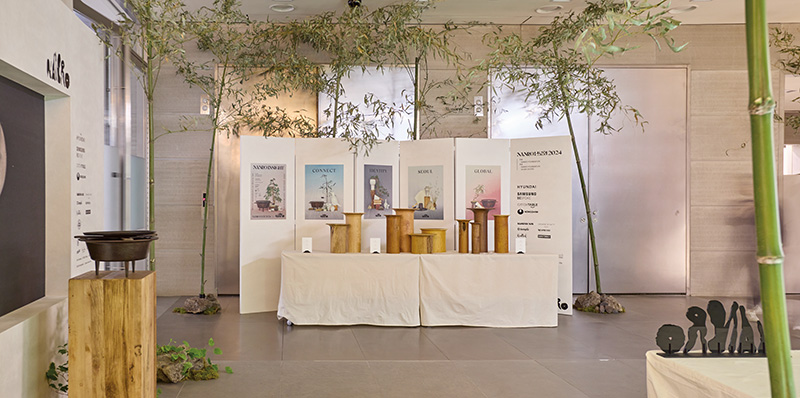
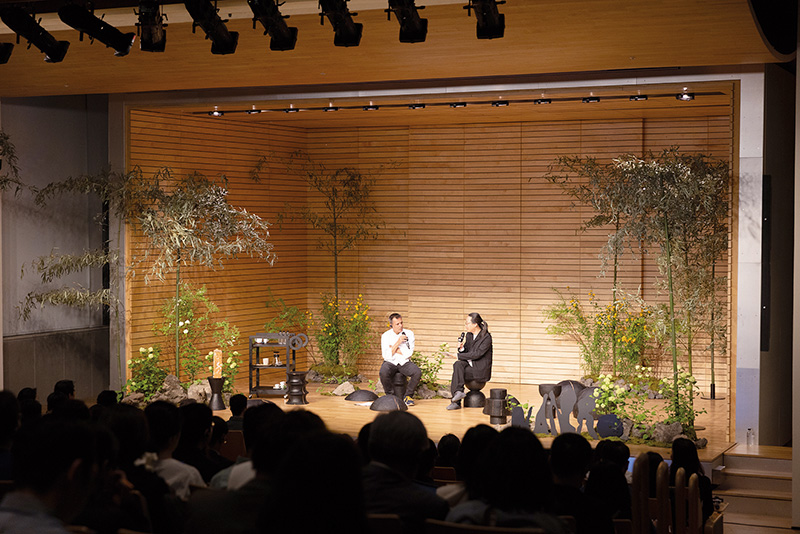
Hansik abroad is a different territory. What pushed you into globalization work in earnest? Hansik abroad has never had a moment like this. Working at a food company, I see the export figures clearly, and as regional co-chair of W50B for Korea and China, I have been watching where the culinary center of gravity moves. After France and Italy came Spain's molecular cooking, Denmark's organic movement, Peru's Amazon ecosystem — and always the question of what comes next. From global media and chefs, the answer coming back was: hansik.
I heard Nanro-hoe started with the goal of strengthening the competitiveness of Korea's F&B industry and Korean BBQ. What kind of Korean food, we asked, could span from $10 to $1,300 the way sushi does in Japan? And it has to be accessible enough to reach a broad public. Line up all those conditions, and the answer that emerges is Korean BBQ. There are as many butchering techniques as there are cuts of a diamond, and the taste changes profoundly depending on who is doing the grilling — which convinced us that this was a dish with real star power.
Over two years, Nanro-hoe has held more than 40 gatherings large and small. Why did you wait until now to open it up as the NANRO INSIGHT symposium? There are 18th-century records of Silhak scholars like Jeong Yak-yong and Park Ji-won returning from abroad and grilling meat on a brazier as a form of refined leisure. I wanted to see what happened if we brought that gesture into the present. That's how Nanro-hoe began. As people who genuinely cared about food culture joined in — marketers, financiers, IT people, artists — we became a community that talked together about the future and sustainability of hansik. To open that up to the public, I felt we first had to prepare ourselves to speak with a sense of social responsibility and to say something genuinely useful.
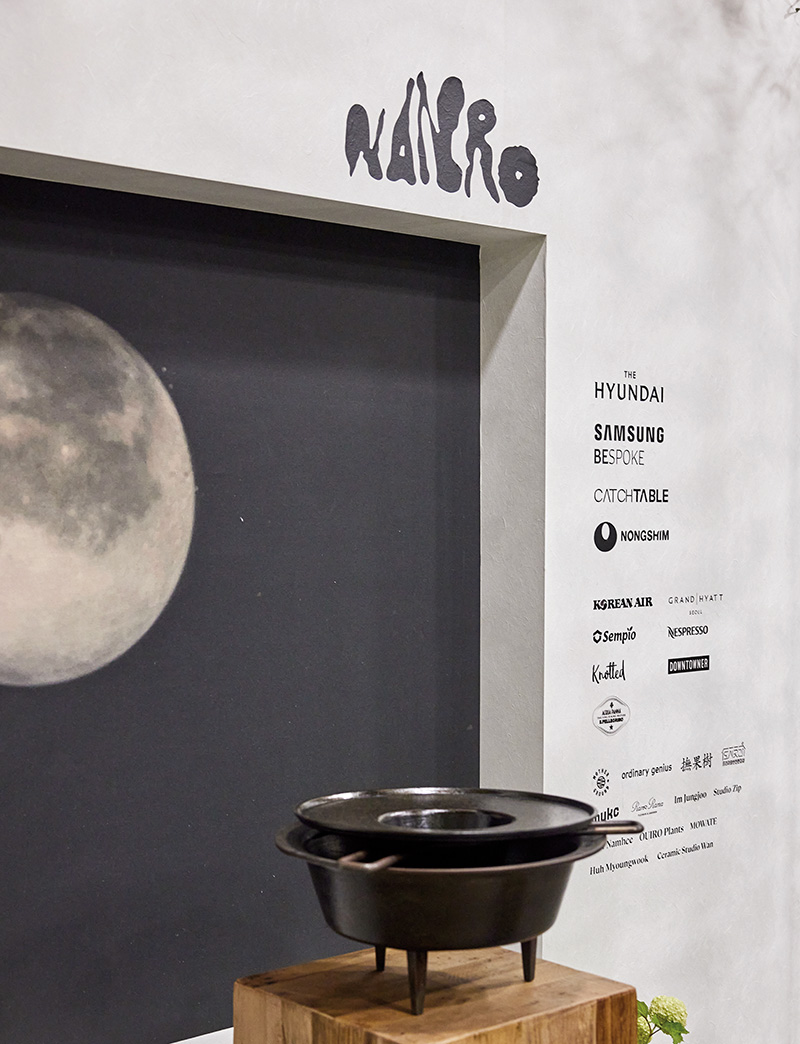
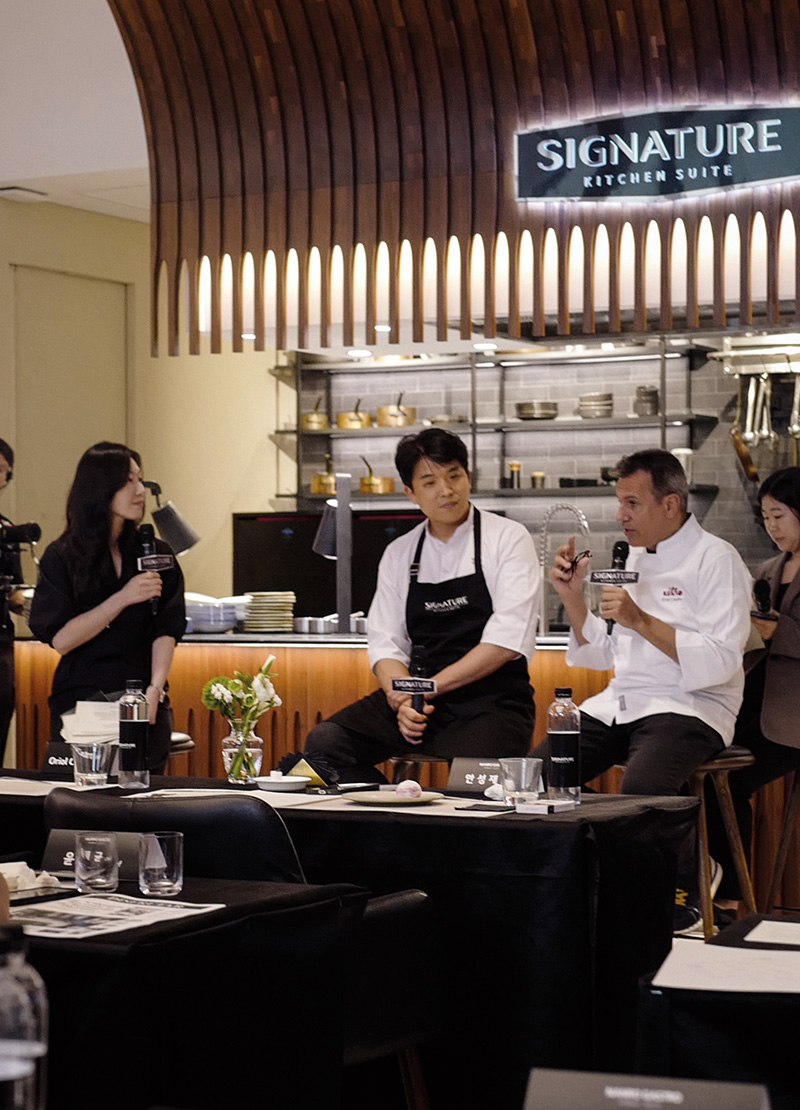
Alongside the W50B No. 1 and No. 2 chefs, the speaker lineup was full of today's so-called "insa" — the sharpest voices from home and abroad. Around 100 people, each with their own day job, formed a task force to prepare it. Nights, weekends — none of that mattered. We ran dozens of video calls with the U.S., Spain, Peru, along with everyone in Korea. Cost was the biggest issue. We were fortunate to receive support from the Leeum Museum of Art, LG and Nongshim, but we were also turned down countless times. I can say with confidence that the past six months were the hardest of my life. The financial loss is substantial. And yet, on the day of the event, seeing high-schoolers who had bought their own tickets to attend, that hardship simply melted away. It was one of the most precious experiences of my life.
What message did you want to send with this event? The overarching theme of the symposium was that for hansik to move forward, we ourselves must first understand its value. Day one covered traditional hansik, the research done so far, the creativity of gastronomy, and connections with adjacent industries like fashion and design. Day two leaned toward the business and consumer side. Alongside the symposium we also held several private events for chefs to exchange with culinary students.
What comes next for Nanro? To grow an industry, in the end you have to grow people. We're going to concentrate more on training talent through international exchange and structured education.
Simon Kim, CEO of COTE
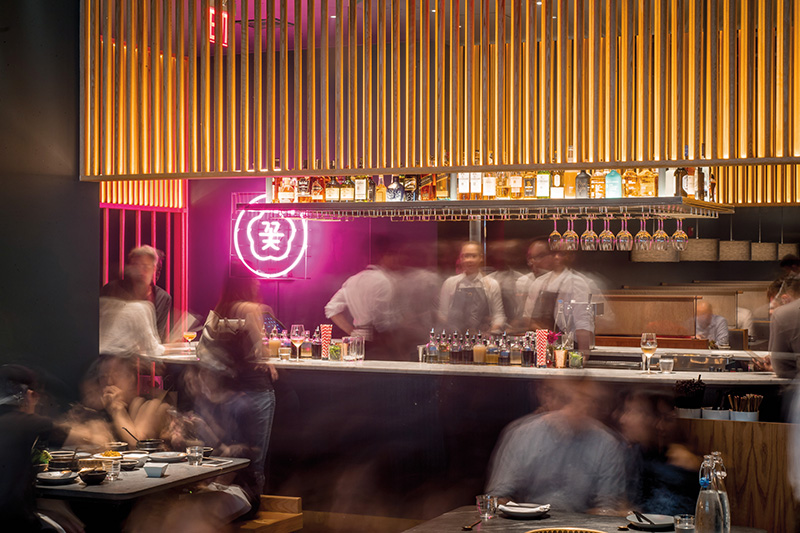
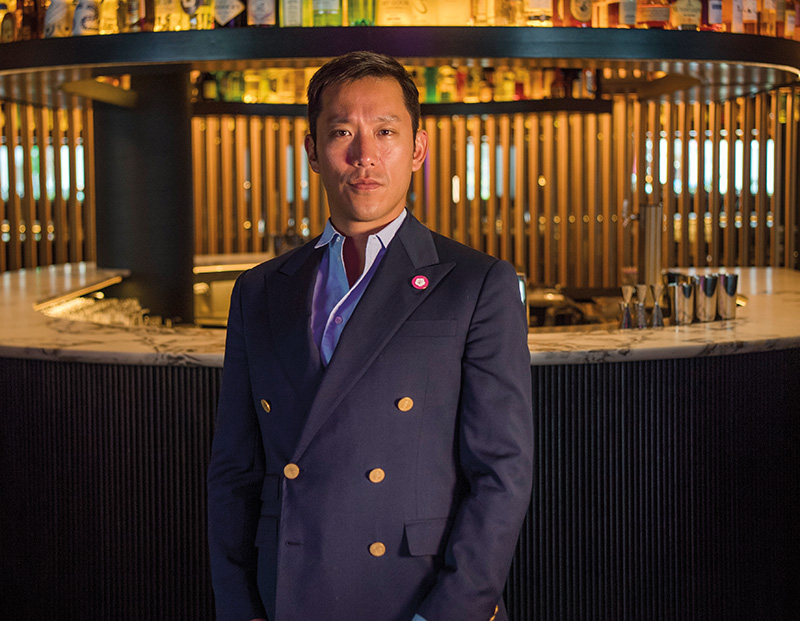
You were invited as a speaker at NANRO INSIGHT. How did it feel? It was the first big event Nanro-hoe had put on, and being able to talk about hansik with chefs from around the world was an enormous honor. For a long time, my thinking has been about how to survive in New York's restaurant industry — this went beyond that, into a shared conversation about where hansik is going globally.
COTE, which opened in 2017, was New York's first Korean steak house. Could you describe it in more detail? There were already plenty of casual Korean BBQ places you could enjoy with beer. But in the U.S., a "steak house" evokes a certain level of refinement, and COTE is a new-concept restaurant that grafts that upscale steak-house experience onto a Korean BBQ. We kept everything a BBQ restaurant needs, but differentiated the place with a dry-aging room, some 1,400 wines and a serious music program.
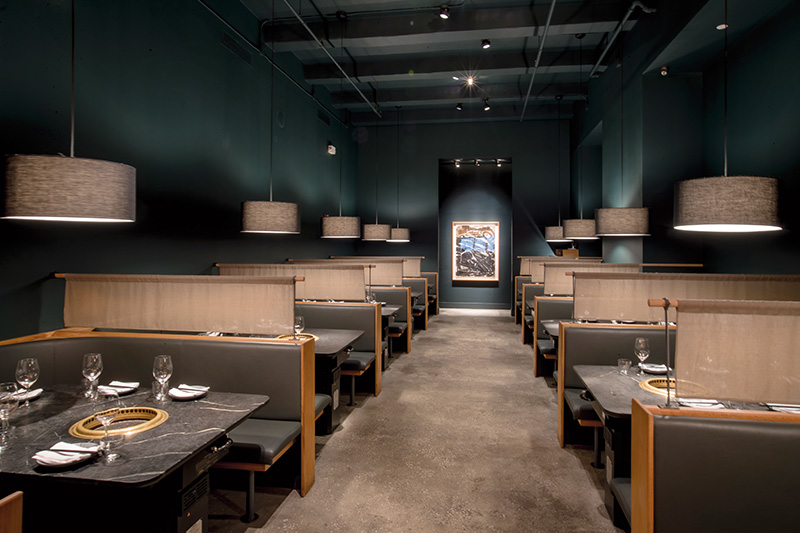
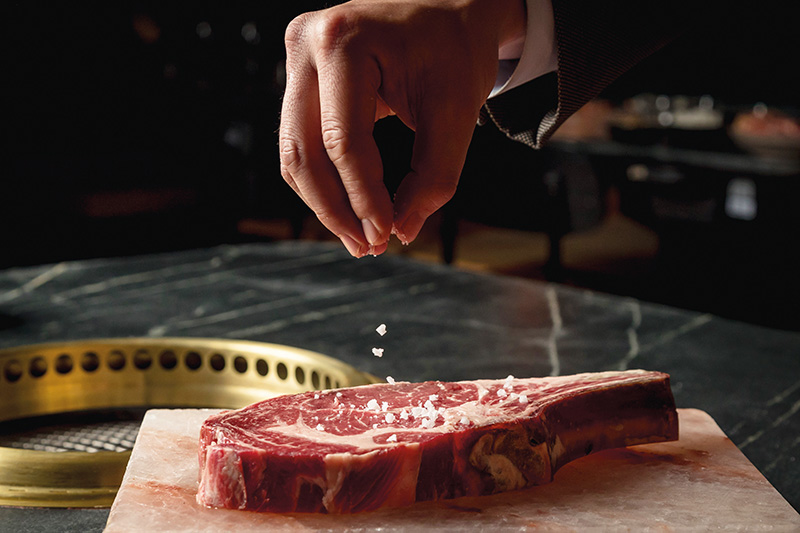
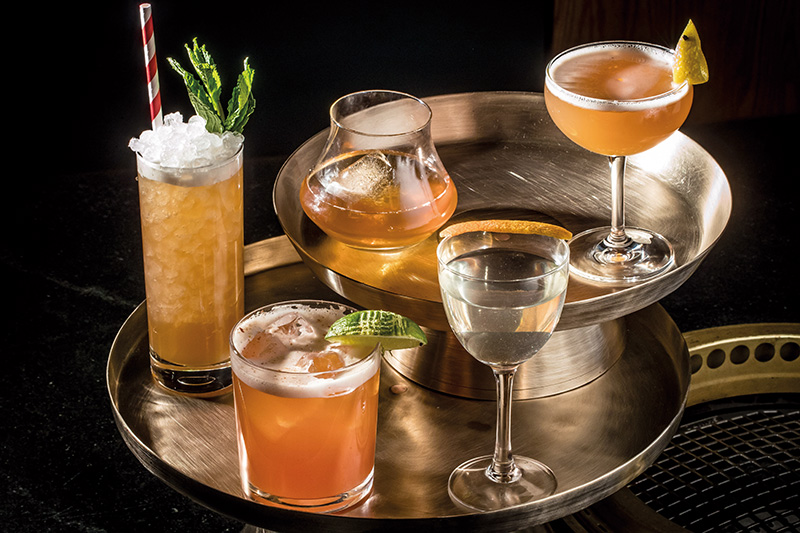
Why the name COTE — kkot, the Korean word for flower? Before COTE, I ran the Italian restaurant Piora — the idea was that I was drawing out some potential inside me and letting it bloom. In the end, everything was preparation for opening COTE. In Korean we also use the phrase "the flower has bloomed" when we see the marbling in a good cut of meat. That's part of it. And there's the meaning of making our culture bloom.
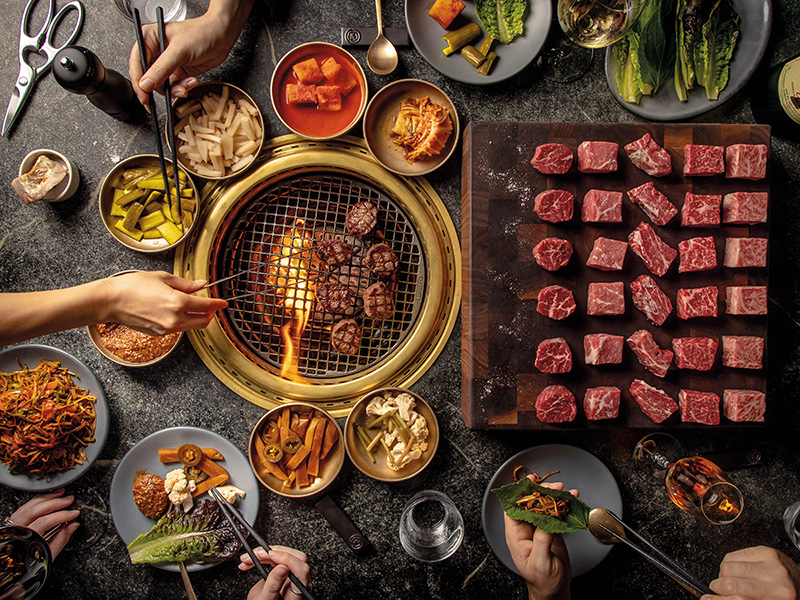
Turning the menu into a set stands out. In the U.S., there had long been the assumption that to properly experience a Korean meat restaurant, you needed a Korean friend to go with — the menus were too unfamiliar. To break that assumption, we packed everything you might experience in a Korean meat house into "Butcher's Feast." It begins with a warm cup of tea and continues through four side dishes, meat by cut, kimchi jjigae, doenjang jjigae, egg soufflé (gyeran-jjim) and a soy-sauce caramel dessert.
What made you pivot from an Italian restaurant to Korean food? Honestly, I had always wanted to run a Korean restaurant that could introduce Korean culture. I thought that once I earned recognition in another field, opening a Korean restaurant would carry more reach, trust and credibility. I knew how to earn Michelin stars and take care of guests, but I didn't know how to make the business turn a real profit. In the end I had to close Piora — I'd poured all the passion of my thirties into it, so it was brutal. I thought hard about how to avoid repeating it, and that's where I learned the most. Going through that is what eventually made COTE work.
What did failure teach you? That the practical, foundational things matter. These days there's a tendency to fixate on ideas or vision, but before that, you need to be relentless about the basics — how to source better ingredients at better prices, how to build smooth relationships with suppliers, how to hire and train the people who will do the work with you. Do those well, and the outcome follows.
What does hansik's standing actually feel like on the ground in New York? A decade ago, there weren't many Korean restaurants standing out in New York. Today it's a different story. Seeing people lining up in front of COTE from 5 p.m. really brings home how much interest there is. It's not just people who like Korean food — it's people of every age, class and background, mixed together.
You've moved through many cultures. What do you think Korea has to work on most to globalize hansik? There's real momentum around globalizing hansik right now. Precisely because of that, I think we need to take a breath, regroup and look harder at the essentials so that this becomes sustainable growth. The second thing is proper localization — the ability to translate hansik's appeal into terms that fit each market. To use a book analogy: when you translate, you have to weave in that country's perspective, trends and current questions. A stodgy translation won't sell, however good the book. It's the same in F&B. Localization is a huge issue. The current focus is on how to take hansik abroad — but in fact, what matters most is the capability of the person doing the translating.
Materials courtesy of the Nanro Foundation and COTE.
· Original (Korean): maisonkorea.com