[K-Food 2.0: Winning Over the World’s Palate]
“Gathered round the brazier, grilling tender meat,
country flavors joined by fresh vegetables too.
If they would just let me drink each day,
I would never regret being poor.”
These lines were written by the 18th-century literatus Kim Jong-su, seated around a brazier with his friends at a ‘nanro-hoe.’ According to the Dongguk Sesigi, a Joseon-era account of the customs of Hanyang describes gatherings where charcoal was lit in a brazier, an iron pan shaped like a kettle lid was placed on top, and beef seasoned with egg, spring onion, garlic and pepper was grilled and eaten together — all called ‘nanro-hoe.’ King Jeongjo and Jeong Yak-yong are said to have enjoyed the ritual with the scholars of the Gyujanggak.
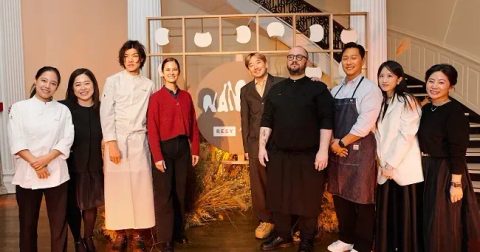
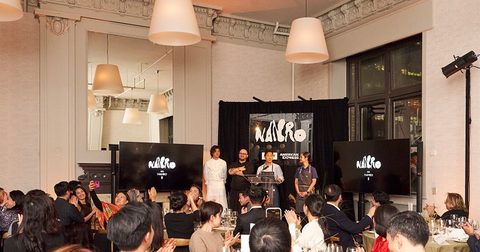
Since early this year, Chef Choi Jung-yoon — vice chair of the World’s 50 Best Restaurants for Korea and China — has been convening a modern nanro-hoe with more than a dozen young owners of Seoul’s well-known grill houses weighing overseas expansion: Byeokje Galbi, Cheonggiwa Town, Mongtan, Geumdwaeji Sikdang and Eunhagye among them. “It’s a group that draws inspiration from the nanro-hoe of the 18th century — the era’s leading intellectuals, trendsetters, and Silhak scholars,” one member said. The theme is “The Future of K-Food — Korean BBQ”: after fermented cuisine and plant-based cooking, they see Korean-style grilling as the next keyword to carry K-Food forward. Grilled meat has long been dismissed at home as cheap cuts drowned in marinade — an image the group wants to reset. It is also striking that not a single grill house has ever received a star in the Michelin Guide Seoul.
“Japanese sushi became a fine-dining icon abroad not just because raw fish on rice was novel and delicious,” Chef Choi said, “but because standing at a hinoki counter, watching a master count each grain of rice as he explains each piece, viewers feel expertise and respect. This group is about researching that same kind of potential for Korean BBQ.”

Koreans waste no part of cow, pig or chicken. The Ministry of Agriculture, Food and Rural Affairs officially recognizes 39 cuts of beef; unofficially, butchers say the number can be broken down as finely as 120. “Cattle were once rare, and our fixation on beef was strong — which is why we have taken beef so seriously,” said Kim Tae-hyun, vice chair of Byeokje Galbi. “In countries where meat is abundant, big blocks are simply cut and grilled. We, on the other hand, developed techniques like scoring tough cuts so they eat tenderly — no one handles meat with more finesse than we do.” He added: “To succeed abroad, you can’t just sell food; you have to convey culture, and that means storytelling. Let’s tell the story of our sincerity toward meat and the artisan’s craft.”
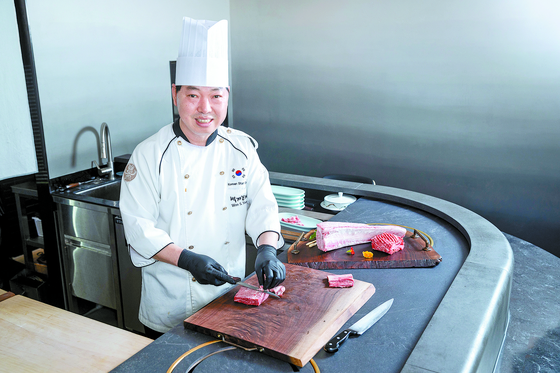
The nanro-hoe brings in guests to broaden the research — among them Professor Lee Kyu-jin of Kyungnam University, author of Bulgogi: A Cultural History of Korean Grilled Meat. Yoon Won-seok, a 34-year veteran of Byeokje Galbi, demonstrated the ‘diamond cut’ on a thick slab of galbisal: diagonal scores on one side, the meat flipped and scored again, until the flesh opens into a mesh of diamond-shaped holes. “Untouched, galbisal has tough sections,” Yoon explained. “Diamond cutting tenderizes the meat, lets the charcoal smoke smoke it lightly through the openings, and helps the marinade penetrate.” In the exacting thickness and spacing of his cuts, one sensed a lineage and depth beyond even a sushi master’s rice-grain performance.

According to a 2020 KFPI (Korean Food Promotion Institute) big-data study of overseas hansik culture and industry, YouTube ‘mukbang’ mentions of trending Korean-food terms show sharp growth in searches for ‘Korean chicken’ and ‘Korean BBQ.’ The appetite is unmistakable. And there is much more to Korean BBQ than the variety of cuts and the artistry of the grill master. Where sushi builds flavor around a single soy sauce, Korea offers many kinds of salt and many kinds of jang. Mix in mushrooms, garlic, spring onion, jeotgal or seasoned greens, and each pairing yields a different taste. This is a country of vegetables, and the ssam and side greens are equally varied. Grill designs — dozens of them — are shaped to match each cut and cooking method. Even simple combinations of these elements make hansik’s depth of flavor and appeal virtually limitless. Imagine a chef breaking down beef in front of you, explaining each cut, and introducing the jang, sauces and ssam culture that pair with the meat’s flavor. Korean BBQ has more than enough to become the driving force of K-Food 3.0.
· Original (Korean): joongang.co.kr