An interview with Chef Choi Jung-yoon, who is designing the future of global Korean cuisine.
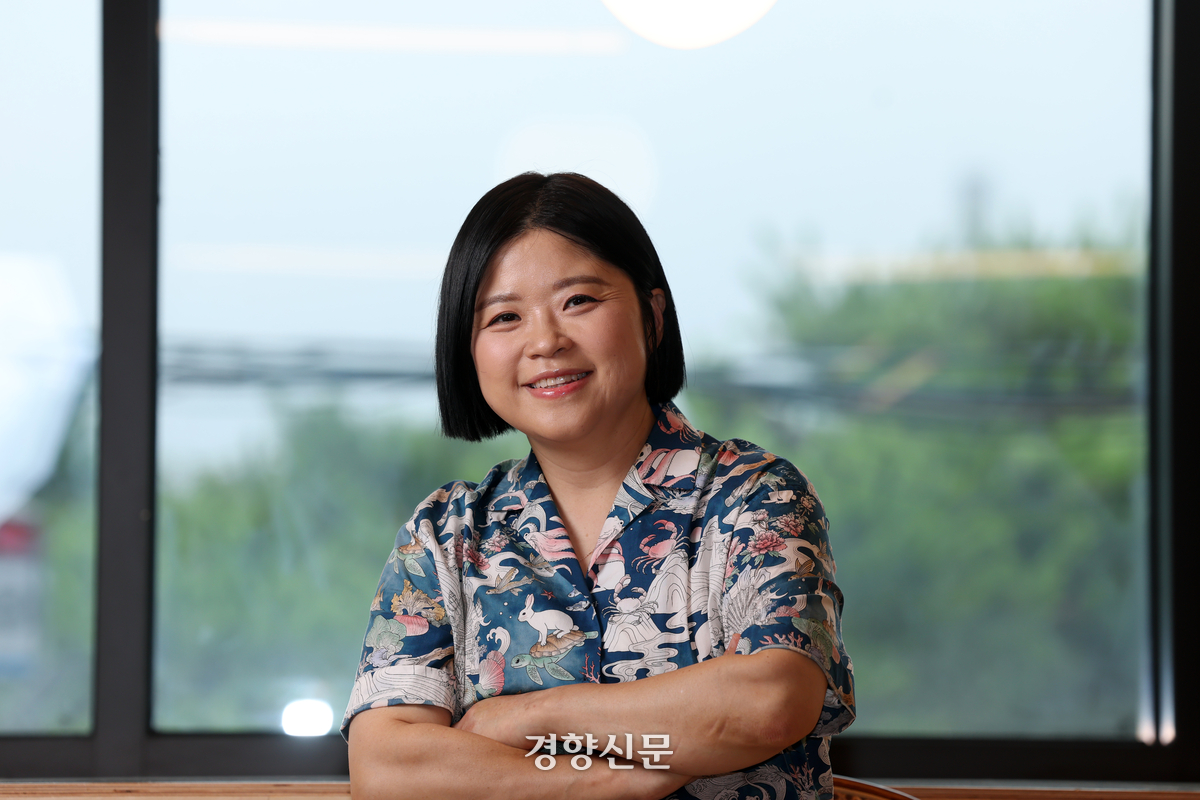
At a moment when tourists are flooding into Korea to eat Korean food, and hansik is considered the most on-trend cuisine in New York — the center of world dining — Choi Jung-yoon is one of gastronomy's busiest figures. Known as a bridge and hub between the domestic and international dining scenes, she is a chef and Korean-food researcher, the head of Nanro-hoe — the community preparing hansik's future — and Chair for Korea at the World's 50 Best Restaurants, one of global fine dining's two great yardsticks alongside the Michelin Guide. She trained at leading restaurants abroad, including Spain's elBulli, then served as head chef at Jungsik; 14 years ago she was named a voter for the World's 50 Best guide and has been an active voter ever since.
"Back then there were barely any Korean voters, and hardly any Korean restaurants or Korean food being discussed on the world stage. When I think about the position Korean cuisine and Korean chefs now hold in global gastronomy, it feels like a different era."
— So you've had an unusual vantage point on how hansik's status has changed.
"It must have been the early 2010s. The government-led globalization of hansik was under way, and there were efforts to launch a Korean edition of the Michelin Guide, but when the assessors visited they went home saying, 'It's still too early.' Around that time, the concept of 'fine dining' in Korea barely existed outside a handful of restaurants inside luxury hotels. Now Korean restaurants in New York earn Michelin stars, and Korean chefs are winning the James Beard Awards — often called the Oscars of American cooking."
— Looking at the World's 50 Best Restaurants regional map, Korea had been grouped with China until last year, but this year Korea has been separated as its own region. What's the significance of that?
"It means Korea's importance in the global fine-dining market is growing. The guide divides the world into 27 regions to select its best restaurants. Cases where a single country occupies its own region have been rare — in Europe, France and Italy; in Asia, only Japan. Because of results like this, the world of fine dining now widely agrees that Korea has been the fastest-growing scene of the past few years."
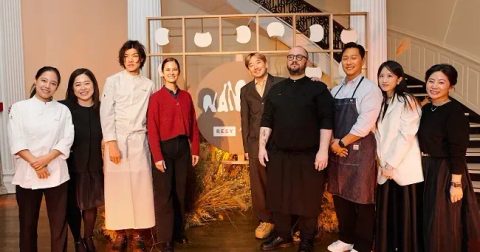
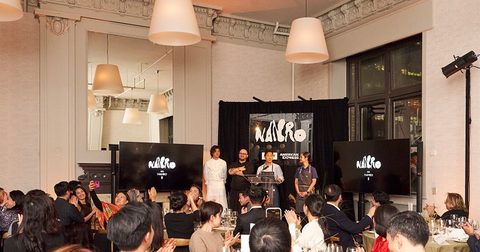
Nanro-hoe, launched around her in 2023, has become one of the most talked-about names in Korea's dining industry. It is a non-profit community of roughly 250 experts — owners and chefs of celebrated restaurants such as Atomix, Onjium, and Geumdwaeji Sikdang, along with figures from traditional liquor, media, and the arts — brought together to think about the development and future of hansik. The name is borrowed from the eighteenth-century Joseon 'Nanro-hoe' gatherings where practical-learning scholars sat around a brazier grilling meat together. In just two years, membership has grown to around 600.
— It's an unusual food-culture community. How did it come together?
"In the past few years, a hansik renaissance has begun. The foods and the ways of eating we have long enjoyed are now drawing interest from abroad — people want to try them. We don't know how long this window will last, but rather than let it pass, we started asking how hansik could remain mainstream 50, 100 years from now. So we agreed to gather, eat together, pick a theme, talk it through, and work to identify hansik's competitive strengths. For example, we take a research topic — like modernizing the jeollip-tu-gol our ancestors once used to boil dishes in an iron nabe — and generate ideas around it. We also run programs, under the name NANRO Academy, where we visit regional masters and learn from them: Kim Mae-soon, who is called the Queen of Jeon; the fermentation master Kim Myeong-seong; and others. You have to know the roots of tradition to create something new on top of them."
— From this year, Nanro-hoe is starting a program called NANRO NEXT in earnest.
"It's the project that grew out of everything Nanro-hoe has been thinking about. What does it take for hansik to be sustained going forward? What do we need to support so that the next An Sung-jae, Kang Mingoo, and Park Jung-hyun can appear? What we keep coming back to is mentoring and education from experts across many fields. To open a restaurant and enter the global market, cooking is the baseline — but you also need to properly understand marketing, management, all the real-world parts. Many of the experts who are part of Nanro-hoe will help with that. You don't have to be a chef. Someone who dreams of being a service manager, or of becoming a traditional-liquor sommelier — they're candidates too. Concrete programming begins this October."
The ultimate goal of NANRO NEXT is to establish a Korean-food school. It has to become normal, she believes, for foreigners to come and learn hansik and how to set up a Korean restaurant.
"If you want to open an Italian restaurant, you go to Italy to learn. If Korea had a school like that, knowledge and people would gather, and hansik could be transmitted around the world in a structured way. If more foreigners come to learn and open restaurants of their own, I believe hansik will move much more naturally into their daily lives."

· Original (Korean): khan.co.kr