The two brought a meat grill from an old Korean genre painting into the present. They see the project as a way of understanding Korean consumers — and themselves — more deeply.
By Moon Sang-deok, mosadu@fortunekorea.co.kr · Photos by Kang Tae-hoon
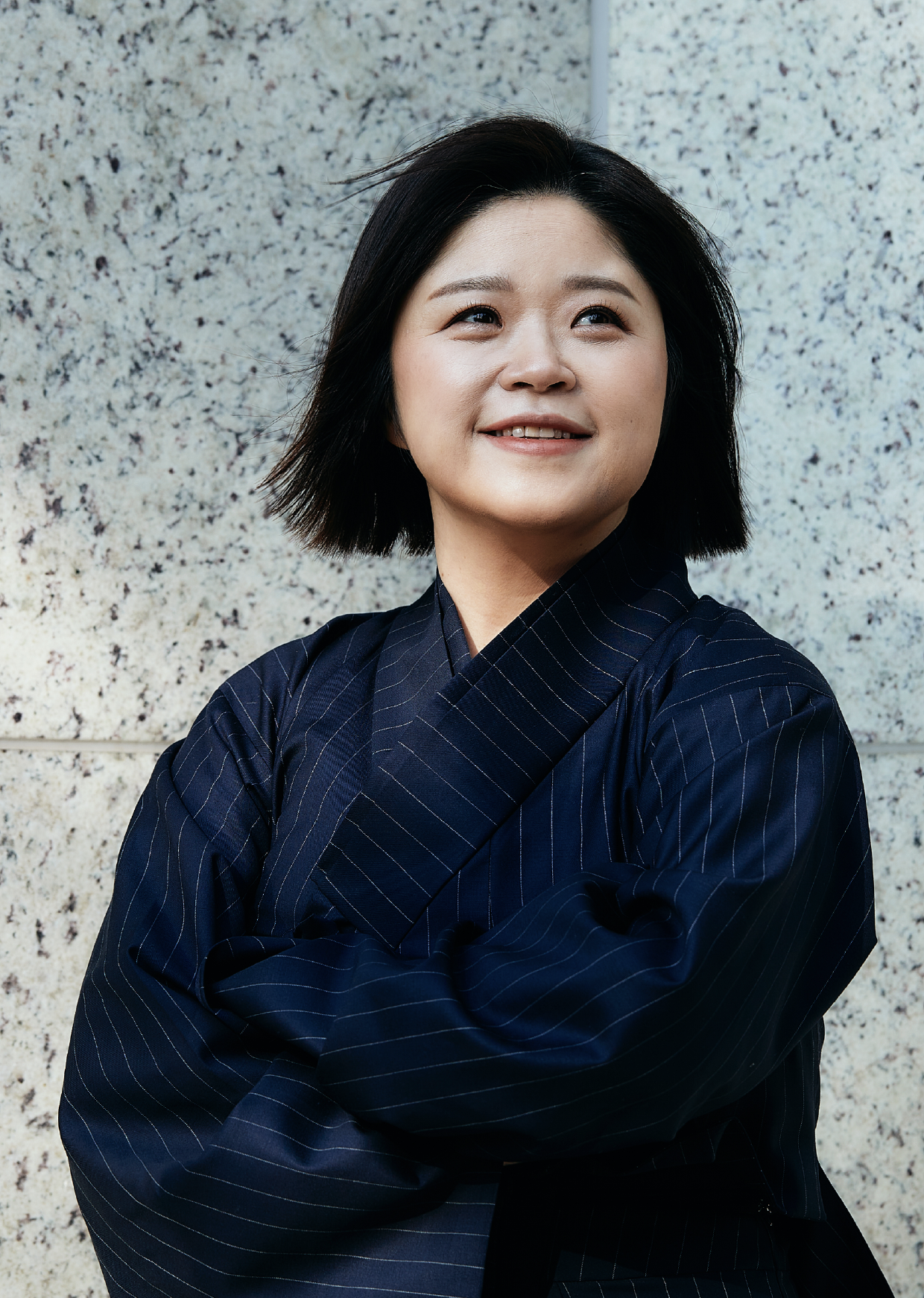
· (Left) Ra Young-hwan, CEO of Helinox. Joined the Helinox brand at Dong-A Aluminum (DAC, a maker of high-strength ultralight aluminum poles) in 2009, and spun it out as a separate company in 2013. Raised Helinox's profile through collaborations with Nike, BTS, and others. In 2023, set up a holding company in Singapore.
· Chef Choi Jung-yoon, chair of Nanro Foundation. A chef and Korean-food researcher of 28 years. Worked at Chosun Hotel, Hyatt Regency Australia, and Jungsik, and studied culinary science at the Alicia Foundation in Spain. Currently head chef at Sempio's Woorimat Research Center and chair of the World's 50 Best Restaurants for Korea and Taiwan.
"On snowy days I would sit with elder Kim across a brazier and grill meat together. On days like that the whole room turned hot with smoke, and the smells of scallion, garlic, and beef fat clung to our clothes."
Park Ji-won was remembering "Elder Kim," who had passed before him (in "Manhyudanggi," Volume 3 of the Yeonam Collection). He may have meant to leave a lesson about not clinging to office, but the man writing that memoir seems, on second reading, to be quietly relishing the memory of those old days "gathered around a brazier, grilling meat."
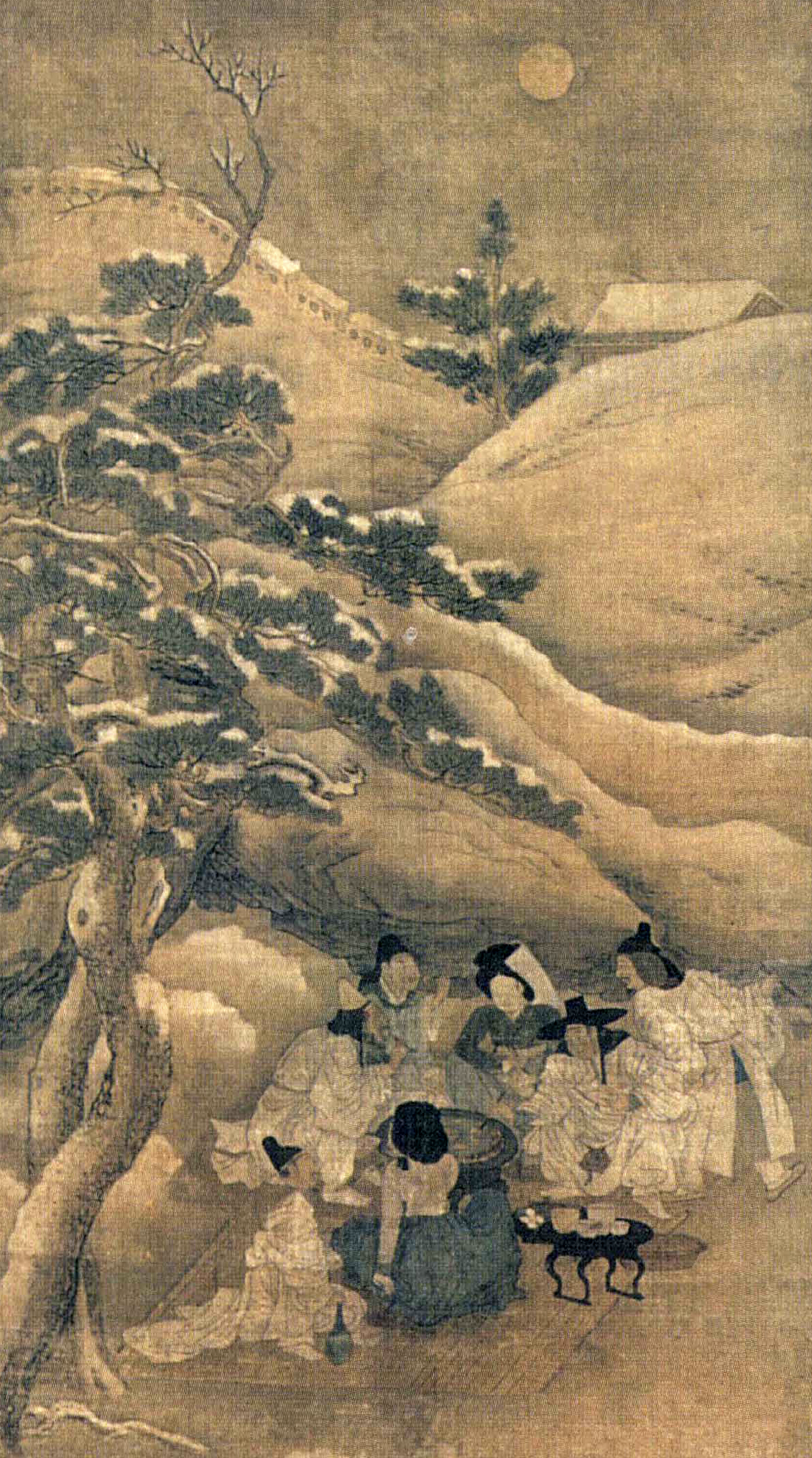
On another snowy day, the painter Kim Hong-do captured a scene of yangban grilling meat by the roadside (Winter Night Feast, from the eight-fold Genre Painting of Travelers). Beef is piled on a jeollip-tu — a grill shaped like an upturned soldier's cap. One figure lifts a not-yet-cooked piece to his mouth. Yeonam and Elder Kim's own gatherings must have looked much like this.
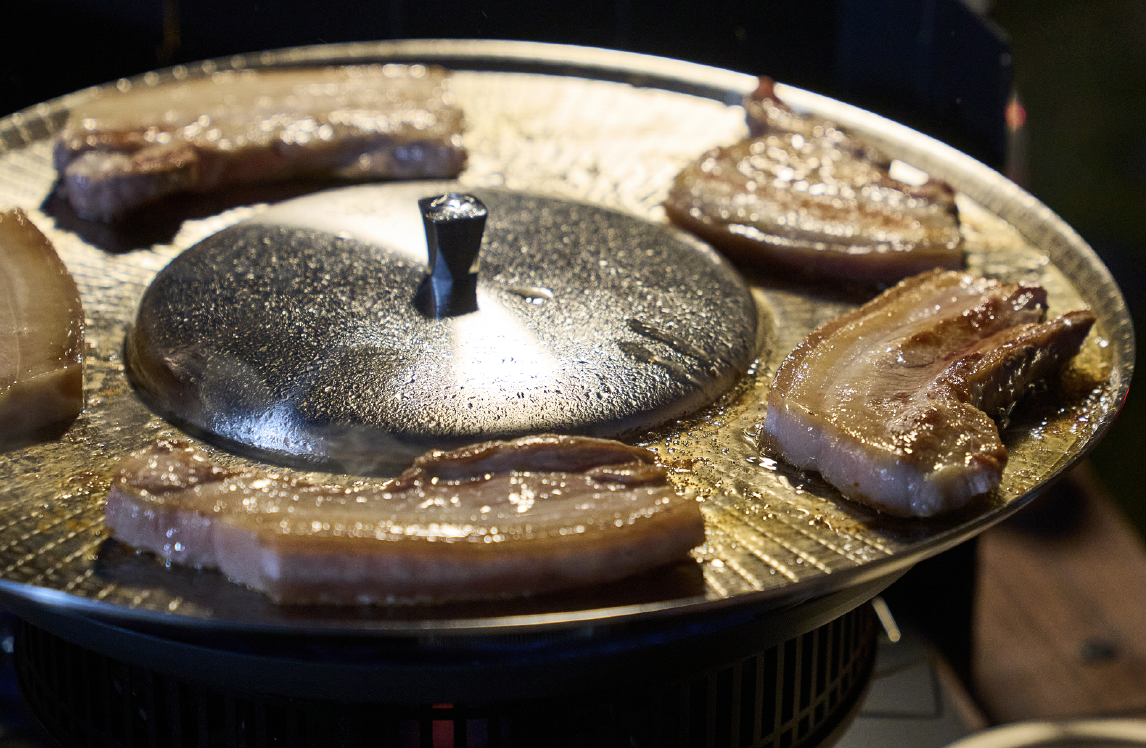
(※ The jeollip-tu is a grill in the shape of an upturned military cap. Vegetables blanch in the deep central bowl; meat cooks on the sloped rim, and the beef juices drain down into the bowl.)
Chef Choi Jung-yoon, who built Nanro-hoe — a chef-centered hansik community — around this idea, keeps the Kim Hong-do painting saved on her phone. Whenever she introduces Nanro-hoe, she opens the photo album. Choi looks for the possibility of "global hansik" in Korea's meat-grilling culture. Winter Night Feast, to her, is proof that this possibility is an "old future."
"Jeong Yak-yong and Park Ji-won were the practical-learning scholars who said, 'Joseon has to change.' They were the hipsters of their day."
Choi sent the image to Helinox CEO Ra Young-hwan too, saying, "This feels like Korean camping culture," and adding, "I'd like to reinterpret this in a contemporary way."
Ra recalls being glad to see it. Koreans, on a camping trip, grill and boil and drink. That's different from the light backpacking that dominates in North America. Looking at the painting, he says, made him realize "we'd been doing this the whole time — we just had better gear now."
Ra, who thinks the essence of a brand is "getting close to the user," accepted Choi's proposal on the spot. To him, digging into people's habits to find the root is precisely how you get close to them. That was December 2023. Helinox is no stranger to brand collaborations, but this was the first time it would develop tools for an entirely new field.
Over roughly a year and a half, Helinox and Nanro's chefs developed a set of "twenty-first-century tools": a modern jeollip-tu and a matching gas stove, Stove One. They are set to launch in the second half of the year.
Q. Helinox is said to never propose a collaboration first.
Choi Jung-yoon That's a fact. (laughs)
Ra Young-hwan Wasn't I the one who suggested it first? (laughs) I think you naturally said, "Let's do it together."
Choi We first met on Ulleungdo. Ra came along with a friend. At the event, people kept feeding him — it was a Nanro-hoe event. Later I published The Korean Cookbook (2023), and we met several times, and I explained, "This is what I do."
Ra I was glad. Korean camping is different from American and European camping. In Korea you go camping and the first thing you do is boil, grill, eat, and drink. Americans, on the other hand, love backpacking. They go for a week on a single backpack, barely eating. It probably comes from the frontier era. To them, Korean camping culture must look strange. But then I saw those Joseon-era paintings — yangban going out to grill meat and unwind. "We've been doing this all along; we just have better gear now."
Choi That's why we named it the Heritage Project. I was thinking about the roots of hansik when I created Nanro-hoe; you were thinking about the roots of Korean camping. Anyone who steps out onto the world stage ends up asking the same thing — "What is it that makes me me?"
Q. Helinox usually collaborates with mainstream consumer brands. This one is different in tone.
Ra Not really — the essence is the same. It has been ever since we started. Helinox's roots are in Dong-A Aluminum, which makes aluminum poles. My father always cared about "who is going to use this?" — this being tent poles. The result was lighter and stronger poles. Americans like light gear. From poles we moved to tent design, and we got good enough at it that we ended up making tents for other outdoor brands. My father became a tent designer.
The interest in the original comes from the same place. What kinds of things do Koreans like, and use well? To answer that you have to look at the culture.
When I started Helinox, my father gave me the same advice. At the time I was doing OEM work on trekking poles and distributing them in Korea. He said, "Why don't you build your own brand?" That, he said, was the way to get closest to the user. It sounded right, so I started Helinox. That was late 2009. I was twenty-five.
Collaborations with other brands are the same idea. How do we get closer to the user? Nike, Supreme, Neighborhood, Starbucks. Every famous brand has its own fandom. The idea was to color our products with another brand's identity and, through that, meet many different kinds of people. I see it as a duty: build good products, and get many people enjoying them.
As our company matured, I started thinking, "Now we can reach the user through co-developed products too." Of course, we could have made a grill or a gas burner ourselves at any point. But we don't make things just because we can. If you source products indifferently, the brand disappears. What I felt with Nanro-hoe was different — with them, we could make a product that Korea's best experts would look at and say, "Yes, this is a proper grill," and put it in users' hands.
Choi Helinox's essence is "putting the person who uses it in the middle."
Ra I think of it as trust. "If I pay 10,000 won to this brand, I get back more than that." A brand has to be able to make that kind of promise. My father and I used to talk about what a brand actually is. At first we thought of it as awareness, or logos. But we came to see that the essence is expectation. Setting a positive expectation for many people. Even the Michelin Guide is really an exchange of expectation and guarantee.
After we grill meat, we always want soup. That, to me, is where our barbecue diverges from the others. — Chef Choi Jung-yoon, chair of Nanro Foundation
Q. So this product must have been carefully engineered.
Choi "Korean barbecue" has the potential to represent hansik. To get there we have to keep developing it. So we researched Korean meat-grilling culture. And when we looked at the Joseon-era jeollip-tu, we found it grilled and simmered at the same time. After we grill meat, we always want soup. That, I thought, is where our barbecue diverges from the others.
So we handed jeollip-tu out to some of Korea's best-known meat restaurants and researched together. The most important discovery was the "oil road." When you grill meat, how you trap the fat and how you drain it are both crucial. Some cuts taste best cooked in fat; others taste best with the fat drained off. So we gave the grill surface a slope — the fat flows, but it also pools appropriately. And at the point where the sloped grill meets the central bowl, we placed a small ledge, so the right amount of fat drains into the bowl. When we tested it at Geumdwaeji Sikdang, it produced a genuinely delicious dwaeji gomtang (pork bone soup). "Managing the fat well matters not only for grilling — it has a huge effect on the broth too." We applied everything we learned to this project.
Ra Without Nanro-hoe, how would we have known the optimal grill angle?
Choi Were you surprised when I said the jeollip-tu had to be round?
Ra A little thrown, honestly. I'm not usually fond of multifunction products. I go in with "let's do one thing well." Once one thing is properly done, it can also serve as multifunction.
Choi Which is why we made it possible to separate the grill from the central bowl. What used to be one piece has been split so each part performs its own function precisely. Put them back together and you can grill and simmer at once. You gave it the perfect name too: "Camping Cookware One Solution."
Q. It looks like stainless steel. Aren't grills usually cast iron?
Ra This is a twenty-first-century material. In the past, metal was used in a single layer. Now there's a process called cladding that lets you bond different kinds of metal together like a sandwich. Different metals contract and expand differently, so bonding them isn't easy — but it is doable today. The outside is stainless steel. Premium cookware is usually stainless. But stainless is somewhat heavy and doesn't conduct heat as well, so we put aluminum in the middle.
Q. Did the material go through several prototypes as well?
Ra I'd wanted to try cladding for a long time. But I didn't want to do it without a story and the expertise to back it up. Then when the ask was, "Let's make twenty-first-century gear," I proposed it. There were several options. We made all of them and cooked on all of them. I even pitched a tent with Chef Bae Jae-hwan of Nanro-hoe and did it in the field. (laughs)
※ Continued in Part 2: "CEO Ra Young-hwan — 'The cutting edge exists in every field: in classical music, in cooking.'"
· Original (Korean): fortunekorea.co.kr