Chef Choi Jung-yoon and Ellia Park, the two women behind NANRO NEXT, are designing the future of Korean cuisine.
At Asia's 50 Best Restaurants 2025, held at Grand Hyatt Seoul on March 25, four Korean restaurants placed inside the top 50: Mingles (5th), Onjium (10th), Seventh Door (23rd), and Ithaanic Garden (25th). All are built on hansik. Often called the Academy Awards of fine dining, this event is the Asian counterpart to the World's 50 Best Restaurants, and this year marks its second consecutive edition in Seoul. Hansik is, quite simply, one of the hottest subjects in global gastronomy right now.
"Nanro" — a name borrowed from the meat-grilling gatherings of late-Joseon scholars
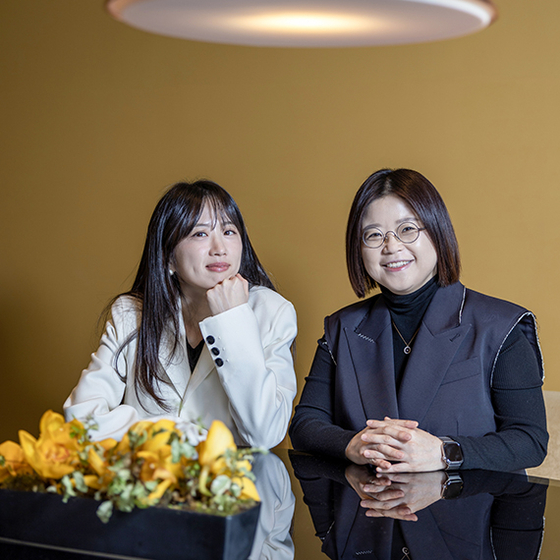
In the middle of that heat, two women are preparing hansik's next step. Chef Choi Jung-yoon of Sempio and Ellia Park, CEO of the Atomix hospitality group. Their current project is NANRO NEXT, a program to discover and back the people who will shape the future of the Korean-food industry.
"Hansik is doing extraordinarily well around the world right now. But what does it take for this momentum to still be here 100 years from now? What do our generation of chefs need to be preparing so that the next Kang Mingoo, the next An Sung-jae, the next Park Jung-hyun can emerge? After all that thinking, we kept coming back to one answer: education." (Choi)
The two are core founding members of Nanro, the non-profit society set up to industrialize hansik, advance research, and cultivate its next generation of talent. Nanro began in 2022 as an informal community — Nanro-hoe — of some 300 experts spanning Korean-food chefs, restaurant owners, food, traditional liquor, finance, IT, branding, and media, before formally incorporating in 2023. The name Nanro-hoe is borrowed from the meat-grilling circles of eighteenth-century Joseon-era scholars such as Yeonam Park Ji-won and Dasan Jeong Yak-yong, who gathered around a charcoal brazier to grill and eat together.
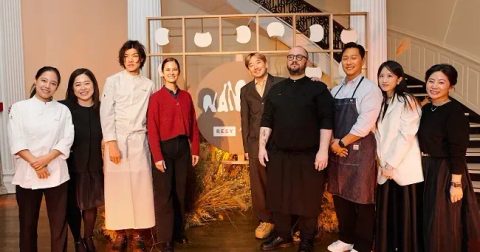
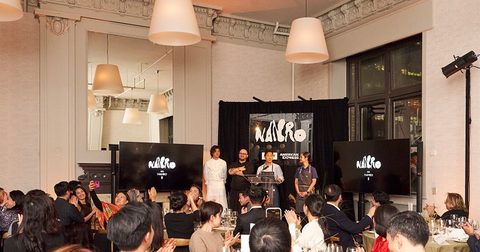
On February 25 the two women held a preview gathering at the Itaewon fine-dining restaurant Soul Dining to introduce the concept of NANRO NEXT and the fellowships that will follow. Guests included leaders from the culinary world — Chef Cho Hee-sook and Buddhist nun-chef Jeong Kwan among them — as well as restaurant executives, marketing leads, and women leaders working across culture, the arts, entertainment, finance, and IT.
"NANRO NEXT isn't just about teaching Korean recipes. It's about supporting the new entrepreneurs who will grow the hansik industry globally. To open a restaurant, cooking alone isn't enough — you also need marketing, legal, and management. So we're building an education program where leaders from all of those fields can mentor participants." (Choi)
Choi heads Sempio's Woorimat Research Center and serves as chair of the World's 50 Best Restaurants for Korea and Taiwan, working at the front line of hansik's globalization. Ellia Park oversees the group that includes Atomix — two Michelin stars in New York, and No. 6 on the World's 50 Best list, the highest-ranked North American restaurant — along with Naro, a Korean restaurant inside Rockefeller Center, and Seoul Salon, a Korean fusion dining bar in New York. Together with her husband, Atomix executive chef Junghyun Park, she has helped raise hansik's stature at the very center of world dining. Atomix's service is widely considered the best in the world, and every system and piece of content behind it is Park's work.
"The concept of Atomix isn't simply a place where you can eat Korean food. We built every detail — the interior, the tableware, even the menu — so that a guest experiences Korean culture. At the same time, we folded in everything my husband and I have seen and felt visiting restaurants around the world. To run a proper restaurant today, you have to design the room as an experience for all five senses, not just taste. That's the story I want to share with anyone preparing to open their own place." (Park)
In October, a hansik immersion for foreign chefs
NANRO NEXT's first fellowship launches this October. It will invite foreign chefs working in the United States — those especially curious about Korean cuisine — to spend a week in Korea experiencing a wide range of hansik-related content.
"If hansik is going to reach further across the world, foreign chefs have to be actively involved. If you want to open an Italian restaurant, you go and learn in Italy. But Korea doesn't yet have a system where foreigners can come and be trained to start a Korean restaurant. Actively supporting them to come here, experience hansik, and develop their own Korean menus — that's what NANRO NEXT is really about." (Choi)
On April 10, another preview gathering took place at Atomix in New York, this one with leaders across various sectors in New York State. Because NANRO NEXT is funded by donations, the team wanted to rally the noblesse oblige culture that runs strong among leaders in the United States. The evening also served as a preparatory meeting toward setting up Nanro's U.S. non-profit entity.
Domestic activity has begun too. An advisory committee for mentoring has been formed, and as its first initiative Nanro donated 50 copies of the book Traditional Korean Foods to students at Komyung Culinary High School so they can learn the fundamentals of traditional hansik. A program that will send Korean chefs abroad for fellowships is also in preparation.
"In the West, Japanese food has settled in as everyday food — something people have eaten since childhood. Hansik is still 'special-occasion' food. For hansik to feel closer to their daily lives, we need more casual Korean restaurants alongside today's fine-dining stars — and it would be even better if foreigners themselves ran those places. That would mean hansik has truly entered their everyday. That's the goal of NANRO NEXT." (Park)
· Original (Korean): joongang.co.kr