‘Jang-making culture’ inscribed on UNESCO’s Representative List of the Intangible Cultural Heritage of Humanity
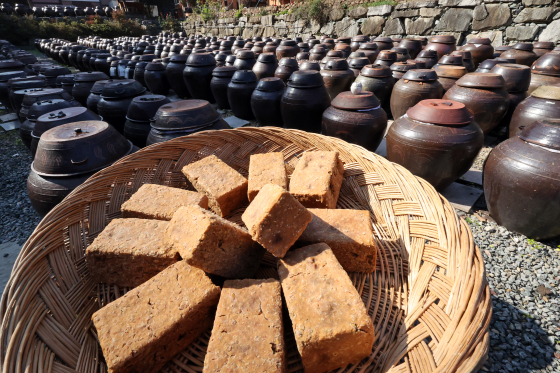
Making meju used to be a whole-village affair — boiled soybeans crushed in a mortar, the courtyard filled with neighbors, and, once the meju blocks were fermenting, the whole house filled with their pungent smell all winter long. Fermented meju mixed with salt and water becomes soy sauce (ganjang) and soybean paste (doenjang). Dried meju powder combined with red chili powder and glutinous rice becomes red chili paste (gochujang). Ganjang and doenjang exist in China and Japan too, but gochujang is uniquely Korean. Once made, these jang go with almost any ingredient and quietly fill Korean tables. Some households even carry a single flavor across centuries through gyeopjang — adding this year’s new ganjang to the ssi-ganjang, or “mother sauce,” left behind generations ago. Korean jang culture has continued this way for thousands of years, and will continue to.
On the afternoon of December 3 (local time), the Intergovernmental Committee for the Safeguarding of the Intangible Cultural Heritage of UNESCO — meeting in Asunción, Paraguay — inscribed Korea’s “Culture of Jang-making” on the Representative List of the Intangible Cultural Heritage of Humanity. The committee found that “the communal act of jang-making fosters peace and a sense of belonging in the related communities,” and that the practice met the criteria by raising awareness of intangible heritage and contributing to cultural diversity. It is Korea’s second food-related inscription after Kimjang culture in 2013, and again places hansik on the world stage.
Wary of over-commercialization, UNESCO inscribes it as a ‘culture’

Lee Kyu-min, president of the Korean Food Promotion Institute, who was in Paraguay for the decision, told JoongAng SUNDAY by phone: “Jang is the foundation of hansik. China and Japan have jang cultures too, but Korea is the first to be inscribed — that fills me with pride.” Ki Sun-do, a Korea Master Artisan of Traditional Food (No. 35), traveled to Asunción at 76, carrying with her the 370-year-old ssi-ganjang of the Yangjinjae household. “I have devoted 52 years to safeguarding the ssi-ganjang I inherited from my mother-in-law,” she said. “Our jang-making culture is now a heritage the whole world must protect together. I hope this draws even greater public interest, and that traditional-jang education continues so that future generations carry the practice on.” Master Ki’s soy sauce became widely known in 2017 when the Blue House used it to season the hanwoo ribs served during former U.S. President Donald Trump’s visit — foreign media at the time described the 370-year-old ssi-ganjang as “a soy sauce older than the United States.”
Millennia of tradition recognized for universal value — next up: makgeolli-making and bibimbap culture
Ganjang, doenjang and gochujang — the so-called “jang trio” — are indispensable seasonings on the Korean table. Hansik is known globally as a “healthy cuisine,” and at its core lie plant-based eating and fermented foods; jang, with its deep and varied flavors, is what holds all of it together. This UNESCO inscription covers the entire fabric around jang: the knowledge, beliefs and techniques of making, keeping and using it, as well as the community culture in which families and neighbors take part together, share the taste and forge bonds.

UNESCO food heritage inscriptions are exceptionally cautious. It is why they are “baguette culture” rather than baguettes, “tea culture” rather than tea, “Kimjang culture” rather than kimchi — inscribing a specific food risks driving the kind of commercialization that erodes cultural diversity.
But it is precisely commercialization that makes global sharing possible. According to the Korea Customs Service, alongside the wider expansion of K-food, exports of traditional jang such as gochujang and doenjang, as well as compound seasoning sauces used to make buldak, tteokbokki, bulgogi and yangnyeom chicken, hit a record $384 million (about 500 billion won) last year, reaching 139 countries.

Sempio — with 78 years of fermentation expertise — has grown its gochujang sales by an average of over 25 percent annually. “Since 2010 we have been researching jang for the world’s palate together with Spain’s Alicia Foundation, and we run culinary studios in Spain, New York and Shanghai to share our jang culture and connect it with local cuisines,” said Choi Jung-yoon, head chef of Sempio’s Woorimat Research Center. “For hansik to grow as an industry, we have to invest in the sauce market. For our jang to win over the world’s palate, it must mingle with local sauces and connect with new flavors — you have to know it to love it.”
Foreign chefs’ interest in the Korean jang trio has never been higher. Among the standout dishes on the hit Netflix show Culinary Class Wars was chef Edward Lee’s gochujang butter steak — a method already circulating among chefs abroad. Chef Mingoo Kang of Mingles — who has been experimenting with the jang trio in desserts and pairings with Western dishes since opening in 2014 — said: “What surprises foreign chefs first is that a seasoning made from soybeans, salt and water — such simple vegan ingredients — can produce hansik’s addictive umami. Gochujang in particular is heat with sweetness, and its paste-like consistency makes it easy to blend with sauces from other cuisines — a lot of chefs love that.”
“The more it mingles with the world’s cuisines, the greater the interest in hansik”

Global chefs drawn to hansik’s plant-forward, fermentation-rich tradition are now traveling to Korea to experience jang-making firsthand, then blending our jang with their own sauces or with cream, cheese and butter to build fuller flavors. Korean jang extends easily across meat, vegetable and fish dishes — its range is broad.
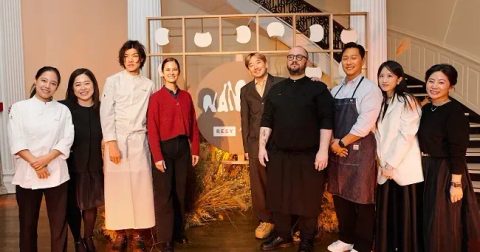
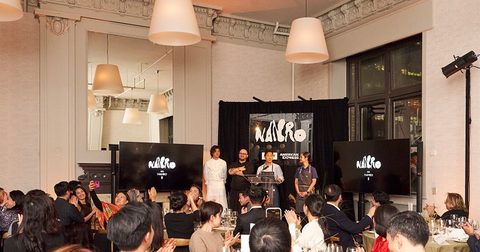
Nanro, the non-profit society for industrializing hansik, doing research and nurturing next-generation talent, worked with chef Kwang Uh of Baroo — the modern Korean restaurant named Los Angeles Times’ Restaurant of the Year for 2024 — to plan and operate the food-and-beverage program for the IONIQ 9 World Premiere held recently in Beverly Hills. The menu, plant-forward and drawing on the spirit of the Buddhist baru gongyang monastic meal, made use of doenjang and gochujang powders, doenjang foam and ssamjang-based sauces, and won praise from some 300 global media and VIP guests on the ground.

Some worry that letting our jang mingle with ingredients and sauces from other cuisines will erode the essence of hansik and of jang itself. Chef Mingoo Kang disagrees: “The more our jang mingles and varies with ingredients from around the world, the more Korean ingredients will be exported, and the greater the interest in Korean culture will grow. Cooking, too, needs an open mind that respects no borders.” In March this year, chef Kang published an English-language book, JANG: The Soul of Korean Cooking, introducing the value of traditional Korean jang and a range of recipes — roughly seven parts Korean to three parts Western, all easy to try at home. “You have to understand jang’s character and essence before you can use it well,” he said. “Even someone who tastes it out of simple curiosity, once hooked on the flavor, tends to want more premium products and deeper Korean-food culture — that is why I wanted to introduce our jang properly to English-speaking gourmets.”
One urgent concern facing jang culture is capturing Korea’s younger generation. Urbanization and industrialization have all but ended the practice of making jang at home. More fundamentally, as younger Koreans eat less rice, the side-dish culture — and even the experience of tasting jang itself — is shrinking fast.

“Beyond globalizing hansik, it is just as important that Koreans themselves understand the value of what we eat,” Lee Kyu-min stressed. “Our role is to inherit, preserve and evolve our unique jang culture and hand it on well to the next generation.” He added: “I hope large companies will collaborate with master artisans to bring premium products that make good use of traditional jang techniques to market — that is how we lead industrial sustainability. Alongside that, we need to keep shifting consumer perception so that people are willing to pay more for traditional jang.”
The words of Lee Mal-soon — a researcher with the Korean Traditional Food Research Association and a disciple of Kang In-hee, the master of noble-family and traditional cuisine — carry particular weight here: “Seven or eight years ago I made jang together with children at three Seoul elementary schools. I got meju straight from the countryside, mixed it with water and salt, and 40 days later we scooped out the doenjang and ganjang. Then, without telling them, I mixed in supermarket ganjang and doenjang so they could taste them side by side. Every one of them said the traditional jang we had made was better. Taste is that honest; our DNA does not change. Everything requires a foundation. Few countries have four distinct seasons and the abundance of mountain and sea ingredients that Korea does. Growing children deserve the chance to eat food made from this variety, and from traditional jang. Yaksik dongwon — medicine and food share the same root. It is time we returned to basic education in our own food traditions.”
· Original (Korean): joongang.co.kr