Dressed casually in a black T-shirt, shorts and sneakers, Chef Choi Jung-yoon greeted us at a cafe near Jung-gu, Seoul. Initially reserved, her face lit up when the conversation turned to the recent Netflix hit “Culinary Class Wars.” “I’m so glad the chefs are getting so much attention,” she said, her enthusiasm for the local food industry evident throughout the hour-long interview.
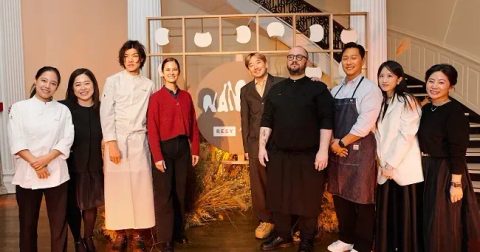
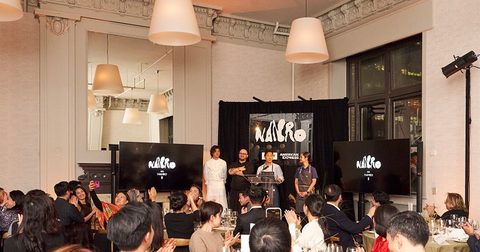
Choi, with over 26 years of experience as a chef and Korean cuisine researcher, founded Nanro — a community of chefs, restaurateurs, epicures and food industry experts — in 2022. Many of the chefs featured on the Netflix show are part of this community. More officially, she is head chef at Korean food conglomerate Sempio’s research center, and co-author of the encyclopedic volume “The Korean Cookbook,” published by Phaidon Press.
Her excitement about the Netflix show isn’t just personal. Choi believes that for Korean food to expand its global presence, proper recognition must be given to chefs themselves, citing how the French government honors culinary icon Alain Ducasse. “I believe it’s important to highlight chefs who can add more value to Korea’s assets, such as its food culture and agricultural products,” she said. Half of Nanro’s 400 members, she noted, come from diverse, non-culinary backgrounds such as film and K-pop. “For Korean food to flourish globally, it must combine with other industries. Nanro hopes to be the accelerator for Korean cuisine.”
Choi suggests Korean cuisine should follow Japanese food, rather than Chinese or Thai. All three have succeeded internationally, she said, but Japanese food has adopted a more premium approach. “Sushi used to be street food. It went from being sold on the streets to becoming premium cuisine. In New York, the most expensive sushi restaurants charge $1,300 to $1,500 per meal. So, it’s acceptable for mid-tier sushi restaurants to charge $500 to $600. But the most expensive Korean restaurant in New York, Atomix, offers a $380 tasting menu.” Pricing, she emphasized, shapes how people perceive the value of Korean food. Asked about the drawbacks of a low-cost, widespread strategy, she replied: “It affects how much the chefs are paid. If I were to work as a chef in Shanghai, while a French chef might earn 2 million won, a Korean chef would only earn 1.2 million.”
Not every cuisine can adopt a premium strategy, she acknowledged, but Korean cuisine now has the opening. “In New York, 11 Korean chefs have earned Michelin stars. That’s rare. That’s why I believe now is the golden time.”
What makes Korean food unique, she said, is its customizable nature. “Korean food is fun and delectable. ‘Fun’ in the sense that it’s customizable. Take banchan, for instance — you can enjoy them in any style you want. What you decide to put together creates a completely different experience, even if you’re sitting at the same table.” Even with Korean barbecue, which she considers the most globally suitable, there are many ways in: “At first, dip it in salt, then try ssamjang. Later, enjoy it with onions and jangajji, or wrapped in ssam.”
One concern she has about the industry is the lack of institutions dedicated to nurturing the next generation of chefs. “There are no schools focused on training new talent. That’s why I think there should be institutions, like the Korea National University of Arts, but for chefs,” she said, pointing to how the Korean film industry flourished after such schools were established. While she isn’t in a position to start a school herself, she has established a private institute through Nanro. She also created a “grill master” certification for Korean barbecue — “like those of sommelier or barista certifications” — to set standards for how it should be cooked.
On the global popularity of ultra-spicy Buldak products, she offered a cultural read. “I asked young Koreans why they eat Buldak, and they told me it’s because they study a lot and don’t get the chance to be active. For them, eating spicy noodles makes them sweat and relieves stress. It’s the only way they can cope with it — and that’s our reality.” These realities, she said, are naturally reflected in Korean dramas and social media, piquing international interest in Korean culture. “It’s like when you watch the Japanese show ‘Midnight Diner’ — it makes you feel like you want to get off work and go for beer and sausages.”
Choi believes such organic global expansion can coexist with the premium strategy she advocates. “We should have a wide spectrum. Besides, it’s happening naturally. No one forced it — it became popular because we eat it.”
· Link: koreaherald.com