The box-office lift of Netflix’s cooking show
Can Netflix Korea’s first cooking survival series, Culinary Class Wars, become the shock that revives a struggling restaurant industry? Episodes 1–4 dropped on Sept. 17 and 5–7 on Sept. 24, and the reaction at home and abroad has been fierce. The show topped Netflix’s global non-English TV rankings, and its buzz is unrivaled: analytics firm Good Data Corporation’s FUNdex named it No. 1 in the combined TV/OTT non-drama buzz index for the third week of September — the highest buzz score of any Netflix original released in 2024, dramas included.
“White spoons” with everything to lose vs. fearless “black spoons”
The most popular thread on Naver’s OpenTalk chat service is also for Culinary Class Wars, with cumulative visitors now past 650,000. Even at 2 a.m. on Thursday Sept. 26, messages keep coming: taste-heavy reviews mixed with lines like “Are none of you going to work tomorrow?,” “I should be sleeping, but it’s too fun,” “Even the black-spoon chefs are locally elite, they’re seriously good,” “I’m hungry now,” “I want to go but the bookings…” and “I want to visit too.”
The premise is simple: 100 chefs fighting a “class war” of cooking — hidden-master “black spoons” celebrated for taste versus star “white spoons” at the top of the Korean industry. In keeping with the martial-arts-showdown feel, the roster is a lineup of characters. As the two judges, restaurant magnate Paik Jong-won (chairman of The Born Korea) and Korea’s sole three-Michelin-starred chef Sungjae An anchor the show with their signature talk and sharp calls.
The “white-spoon” side, most of whom could easily headline as judges themselves elsewhere, includes star chef Choi Hyun-suk; Chinese-cuisine grandmaster Yeo Kyung-rae; Chef Jung Ji-sun, Korea’s first female Chinese-cuisine star; Choi Kang-rok, winner of MasterChef Korea 2; Lee Young-sook, winner of Great Korean Kitchen 2; and Chef Edward Lee, winner of Iron Chef 2010.

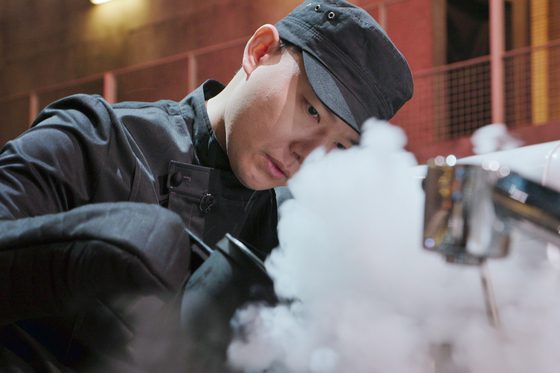
“Black-spoon” chefs — who can only reveal their names once they reach the final round — appear under nicknames: “Chinese Goddess” (a protégé of chef Yeo Kyung-rae); “The Crazy Cook,” obsessed with distinctive dishes; “Hidden Genius,” who proved his brand with a single aglio e olio; “Business Genius Boss Cho” and “Imokase No. 1” for their skilled home-style hands; “Triple Star” and “One-Two-Three” for the essence of fine dining; “Manzzitnam,” who researches recipes inspired by comics; and “Seungwoo’s Dad” with his inventive ideas.
The creative team, led by producers Kim Hak-min (JTBC’s Two Yoo Project — Sugar Man 3 and Sing Again) and Kim Eun-ji (Sing Again 2), explained the concept: “We wanted a clear, easy-to-read survival tension between white-spoon veterans who have everything to lose and fearless underdog black-spoons.” They said they invested heavily in landing the “white-spoon” star chefs. “These are people with no obvious reason to enter a competition. Many of them stepped in with the thought that they could do something to help the restaurant industry in the current downturn — start a fresh wave of interest. Their view was that the more famous chefs joined and the bigger the show got, the more attention Korea’s restaurant industry could draw at home and abroad — and that put a matching sense of responsibility on our shoulders.”
Restaurants become new tourism

The producers and star chefs called it right. Almost immediately after the show aired, a “list of restaurants belonging to Culinary Class Wars chefs” began circulating on social media — a fresh outlet for a gloomy dining scene. Only 20 of the 80 black-spoon chefs survived the first round, but most of these lists include the restaurants of the 60 who were eliminated as well. The lists include not just addresses but signature dishes, prices and each chef’s specialty, alongside prompts like “Should we go one at a time and stamp them all?”
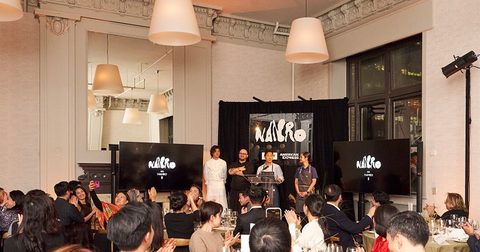
Chef Choi Jung-yoon, Chair of Nanro — the non-profit dedicated to industrializing hansik, doing research and nurturing next-generation talent — described the industry’s lift: “Within two days of the broadcast, contestants’ restaurants were booked out through October and November, Instagram followers climbed by four to five thousand, and a few chefs have started fielding ad offers.” Sure enough, Namyoungtaek (the Namyoung-dong shop belonging to the chef who appeared as “Yeongtaek”) had a line before opening; the nearby izakaya Edamame (whose chef appeared as “Ganguii”) posted on Instagram: “We thought we had prepared enough, but so many guests came that we’ve run out of ingredients and are closing early.”
As the show and its accompanying lists snowballed, Naver on Sept. 25 published a map of about 100 Culinary Class Wars-linked restaurants on Naver Maps. Users can build and share custom lists via the “Save” tab and reserve tables through the “Reserve” tab.
Kim Sun-hee, chief of well-known Seoul restaurant Lockheeok, said, “Ingredient costs have shot up and consumers have closed their wallets in a frozen economy — the whole industry has been hunched over. Thanks to Culinary Class Wars, restaurants have a rare pulse again. I’m cheering on the passion and hard work of Korea’s chefs.”
· Original (Korean): joongang.co.kr